Pittsburgh Team Secures $41.5M for Next-Gen Autonomous Wheelchair Revolutionizing Disability Independence
November 6, 2025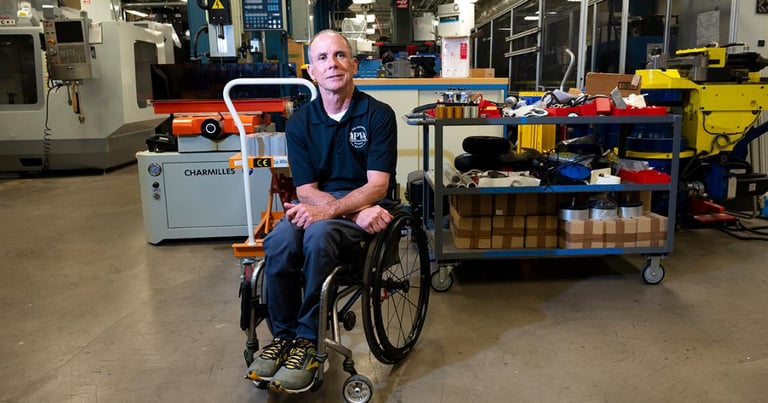

The autonomous wheelchair will offer personal autonomous navigation for home and outdoor use, tackling edge cases like busy streets and blocked walkways where current systems fall short.
Key team members include Taskin Padir of Northeastern and RIVeR lab, Todd Roberts of ATDev who will commercialize the platform, and Owen Kent, ATDev co-founder with muscular dystrophy who has long championed autonomous wheelchair innovation.
RAMMP will integrate advanced robotics, artificial intelligence, a novel operating system, and digital twin technology within a Robotic Assistive Mobility Manipulation Simulation environment for precise, safe, and scalable testing in realistic simulations.
A University of Pittsburgh research team at HERL has been awarded up to $41.5 million from ARPA-H to develop the Robotic Assisted Mobility and Manipulation Platform (RAMMP), a next-generation wheelchair and robotic arm aimed at boosting independence, safety, and quality of life for people with disabilities, including veterans.
RAMMP envisions broader benefits beyond mobility, including feeding, door opening, medication management, and grocery shopping, while recognizing that fully automating tasks such as bed transfers and dressing remains for the future.
Kinova Robotics will build the wheelchair’s robotic arm, LUCI Mobility will handle the camera system, and the team plans a working prototype within 12 months with commercialization anticipated alongside ongoing research.
Co-design will be central through participatory action design, engaging wheelchair users, clinicians, and advocacy groups to ensure solutions meet real-world needs and safety concerns.
Current wheelchairs are outdated—heavy, battery-dependent, and heavily licensed—highlighting a need for modernization in the category.
A Northeastern-led collaboration is developing an autonomous wheelchair with a robotic arm to markedly increase independence for people with quadriplegia and other mobility limitations.
HERL’s ARPA-H award recognizes its pioneering mobility work, including prior development of MEBot, a robotic wheelchair capable of autonomously climbing curbs and stairs with a stabilized seat.
RAMMP is expected to spur domestic manufacturing and create a new workforce in Pittsburgh and Pennsylvania, promoting advanced mobility systems production in the U.S.
The platform aims to reduce tipping and falls, enhance mobility, and enable coordinated robotic arm manipulation for everyday tasks, featuring real-time 360-degree environmental awareness and adaptive navigation for complex settings.
RAMMP involves a nationwide consortium—including Northeastern, Pitt, CMU, Cornell, Purdue, and private partners Kinova Robotics, LUCI Mobility, and ATDev—with up to $41 million in support over five years.
The national consortium comprises Kinova Robotics, LUCI Mobility, ATDev, CMU, Cornell, Northeastern, Purdue, and Pitt as collaborators on the RAMMP project.
The RAMMP project is led by co-principal investigators Rory Cooper, director of HERL and Pitt professor, and Jorge Candiotti, Pitt associate professor and VA biomedical engineer, marking Pitt’s first ARPA-H grant-led project.
Summary based on 2 sources
Get a daily email with more AI Research stories
Sources

Northeastern Global News • Nov 5, 2025
This AI-powered autonomous wheelchair will deliver a new level of independence
University of Pittsburgh • Nov 4, 2025
HERL researchers will lead a $41M ARPA-H grant, a first for Pitt