AI Revolutionizing Cyber Defense: Balancing Threat Detection and False Positives in an Evolving Landscape
October 2, 2026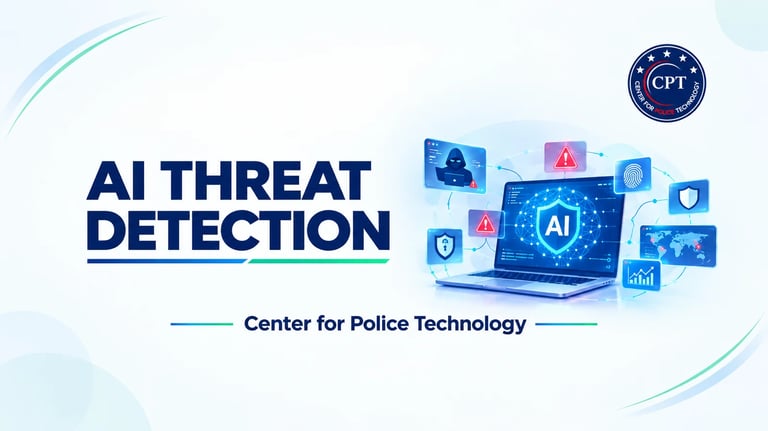

AI threat detection is advancing beyond traditional signatures to anomaly detection, behavioral analytics, ML, NLP, and AI-assisted security operations, enabling identification of unusual patterns across systems.
AI detects threats by correlating signals from login activity, devices, locations, user behavior, data access, network activity, and transactions to surface anomalies.
For the public, guidance emphasizes verifying requests independently, resisting urgency, not relying on voice or video alone, protecting exposed information, and using strong authentication.
Despite progress, AI can generate false positives, miss threats, rely on poor data, and be manipulated; investigations must verify data quality, legality, and seek independent corroboration.
The future of defense is context-rich, explainable AI that supports investigations, with defenders needing human oversight and speed to match evolving threats.
AI is accelerating both cybercrime and defense, making it a dual-edged tool for attackers and defenders.
Law enforcement and public safety applications involve triaging large digital evidence sets—from emails and chats to IPs and device logs—while treating AI alerts as leads that require corroboration.
Criminals use AI for targeted impersonation, automated reconnaissance, data analysis of stolen information, scalable fraud, and more efficient crime workflows, as seen in platforms like EvilTokens.
Defensive posture includes identity and access management, MFA, least privilege, EDR, network monitoring, SIEM, DLP, threat intelligence, behavioral analytics, AI-specific controls, continuous logging, and human oversight for high-risk actions.
AI complicates threat detection by enabling polished, context-aware attacks that blur lines between legitimate and malicious activity, requiring holistic, multi-signal analysis.
Emerging AI threat-detection technologies—from Google’s AI Threat Defense to CrowdStrike Falcon AIDR and other agentic AI SOC tools—signal a market shift toward integrated AI across detection, investigation, correlation, hunting, and response.
Summary based on 1 source
Get a daily email with more AI stories
Source

The420.in • Oct 2, 2026
Day 2 AI Threat Detection: How AI Is Fighting the AI-Powered Criminal