New Study Reveals Human Vision Can Exceed 60 Pixels Per Degree in VR/AR Applications
November 6, 2025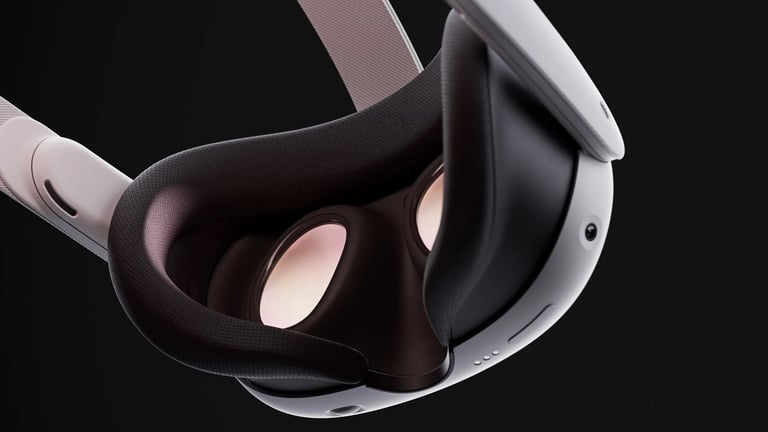

The findings imply practical display resolution limits for VR/AR may exceed current headsets, with examples like Meta’s Tiramisu reaching about 90 PPD on a small FOV and future goals targeting 60 PPD over a 90° FOV.
A Cambridge and Meta Reality Labs study published in Nature challenges the long‑held 60 pixels per degree retinal resolution, showing foveal vision can discern higher PPD values under certain conditions, with grayscale up to 94 PPD, red‑green up to 89 PPD, and yellow‑violet up to 53 PPD—and one participant reaching about 120 PPD.
The results indicate that average discernible grayscale details can reach 94 PPD, red‑green patterns 89 PPD, and yellow‑violet patterns 53 PPD, with an outlier at roughly 120 PPD, suggesting retinal thresholds can exceed 60 PPD for some individuals.
The paper detailing methods and results is published in Nature Communications, providing a rigorous basis for re‑evaluating the 60 PPD limit and signaling decades of potential improvements in VR/AR display resolution.
Caveats: Even with higher retinal resolution, factors such as optical artifacts, refresh rate, subpixel layout, binocular overlap, and eye box size affect perceived image quality, so no headset achieves retinal‑quality visuals in all conditions.
The study tested visual resolution using a 27‑inch 4K monitor on a motorized rail, with participants fixed in place, presenting square‑wave gratings and text at varying distances, including upsampling/downsampling and different viewing angles.
Context on headset PPDs today: consumer and high‑end headsets range roughly from 22–40 PPD, with enterprise and experimental devices reaching higher benchmarks (Varjo XR‑4 around 51 PPD; Butterscotch prototype ~56 PPD).
The research team concludes that the traditional 60 PPD benchmark is not the true upper bound for human visual detail in VR/AR, as many observers can discern higher PPD under specific conditions.
Bottom line: The study pushes the benchmark higher and signals room for improvement in display technology, rendering strategies, and headset specs, though practical retinal‑quality visuals depend on multiple interacting factors.
Implications for XR and foveated rendering: findings point to a higher target for true retinal resolution and potential for more aggressive color‑channel‑dependent rendering reductions in the periphery to save bandwidth and compute.
Despite the potential higher discernment, real‑world headset hardware is far from these limits, with current high‑PPD demos in the 50–60 PPD range and broader field‑of‑view trade‑offs still in play.
Methodology: researchers used a novel sliding‑display device to measure visual resolution across foveal and peripheral vision at varying distances and color channels, reevaluating the retinal resolution benchmark.
Summary based on 2 sources
Get a daily email with more Tech stories
Sources
UploadVR • Nov 5, 2025
Cambridge & Meta Researchers Confirm "Retinal" Resolution Is Far Higher Than 60 PPD
Road to VR • Nov 5, 2025
Cambridge & Meta Study Raises the Bar for 'Retinal Resolution' in XR