China Tightens Dollar Liquidity, Raises Forex Reserve Ratios to Curb Yuan Appreciation
November 3, 2026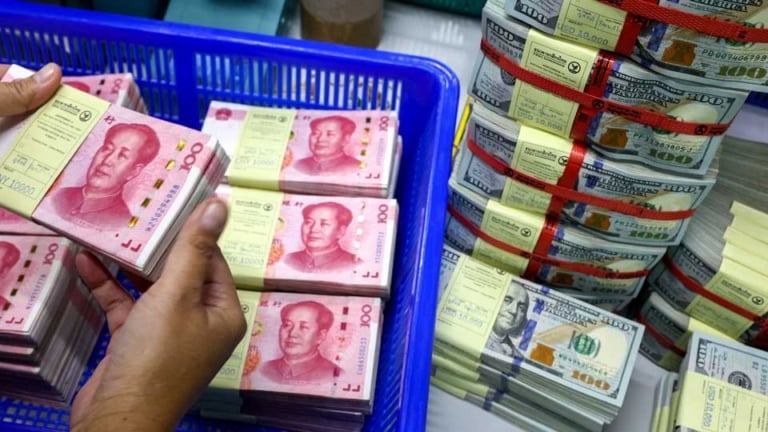

The People’s Bank of China raised the foreign-exchange reserve requirement for financial institutions by 2 percentage points, to 6%, effective November 15, in a bid to cool the yuan’s rapid gains.
The move follows a roughly 10% rise in the yuan against the dollar since early 2025, including a 0.74% gain in October that brought its year-to-date advance to about 5%, supported by strong exports, trade surpluses and companies converting dollars into yuan.
The policy is intended to tighten dollar liquidity and temper appreciation amid strong exports and seasonal demand for yuan; analysts also pointed to the currency’s strongest level in more than four years as a sign Beijing was concerned about the pace of its climb.
By requiring banks to hold a larger share of foreign-currency deposits as reserves, the change limits their ability to convert dollars into yuan and is expected to curb demand for the Chinese currency; it is estimated to remove about $24 billion from the financial system.
The increase reverses a September 2023 reduction in the same requirement, which had been made to support the yuan.
Higher dollar deposit returns may encourage exporters and savers to retain funds in dollars rather than convert them into yuan, potentially easing pressure on exporters and slowing the currency’s rise.
Some Chinese banks have raised dollar deposit rates to above 4% in certain cases, while major state lenders have cut yuan deposit rates as low as 0.95%; the higher dollar returns may also restrain yuan gains.
After the policy shift, the onshore yuan fell to 6.6728 per dollar, down about 0.33% for the day and its biggest one-day decline in six months; the PBOC also set a weaker-than-expected midpoint, which defines the center of the currency’s permitted daily trading range.
OCBC analysts viewed the measures as an effort to moderate, not reverse, the yuan’s appreciation, noting that broader dollar movements and the PBOC’s daily fixing guidance would continue to shape the exchange rate.
The timing also comes ahead of seasonal year-end and Lunar New Year conversions into yuan, which have historically supported the currency in December and January.
Summary based on 7 sources
Get a daily email with more Financial Markets stories
Sources

Investing.com • Nov 3, 2026
China to raise forex deposit reserve ratio to 6% starting November 15
The China-Global South Project • Nov 3, 2026
China Moves to Slow Yuan Gains as Currency Heads for Biggest Drop in Six Months
Investing.com • Nov 3, 2026
Why is the Chinese Yuan falling today?