Dnmt1 Inhibition Links Metabolism to Chondrocyte Maturation, Offers Insight into Bone Growth and Osteoarthritis
November 6, 2025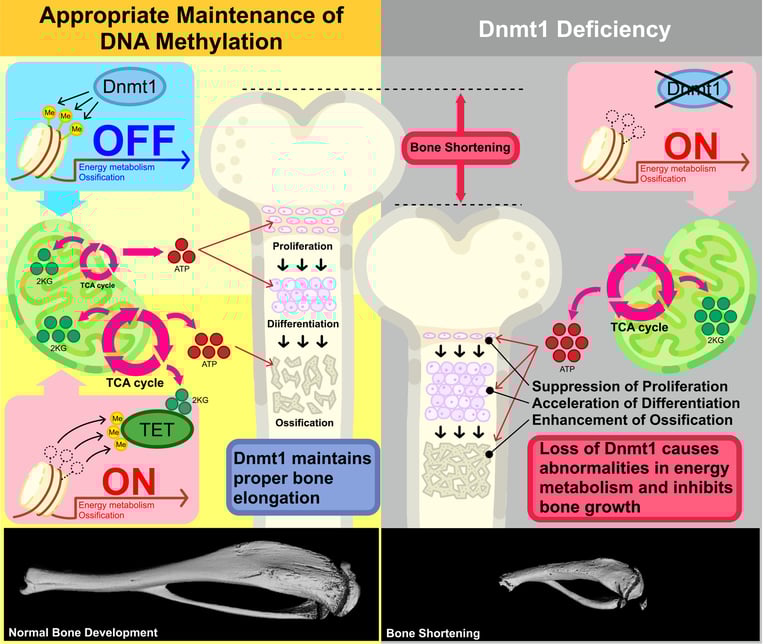

Methods included creating mice with mesenchymal Dnmt1 knockout, conducting RNA-seq and methylation analyses on cartilage, and validating findings in human chondrocytes from surgical samples.
These findings point to potential translational applications, where nutritional and metabolic interventions could help prevent or treat impaired bone growth and osteoarthritis.
Loss of Dnmt1 in limb mesenchymal progenitors leads to premature maturation and disrupted growth plate dynamics, contributing to shortened bone length.
The MSK-KP musculoskeletal database links DNMT1 genetic variation to human height, underscoring relevance to growth.
RNA sequencing and DNA methylation analyses reveal Dnmt1 couples epigenetic regulation with metabolic control during cartilage development, an effect mirrored in human chondrocytes when Dnmt1 activity is reduced.
The study is formally released by Ehime University’s Public Relations Team, with funding from JSPS KAKENHI, AMED BINDS, MEXT programs, and CURE/JPO grants.
Dnmt1 directly modulates genes governing cellular energy metabolism, and its inhibition dampens the accelerated maturation seen in mutant chondrocytes, linking metabolism to cartilage development.
In human chondrocytes, reduced Dnmt1 activity similarly boosts energy metabolism and maturation markers, suggesting a conserved mechanism across species.
Overall, Dnmt1 regulates energy metabolism in chondrocytes to ensure proper maturation and normal bone elongation in mice.
The study ties epigenetic regulation, energy metabolism, and skeletal development, highlighting DNMT1 variants’ relevance to height as identified in MSK-KP.
Dnmt1 appears to coordinate energy metabolism to support proper growth plate function and bone elongation, suggesting metabolic or nutritional strategies for preventing or treating impaired bone growth and osteoarthritis.
Mice lacking Dnmt1 in limb mesenchymal progenitors show shortened tibiae, a reduced proliferative zone, an expanded hypertrophic zone, and accelerated chondrocyte calcification, indicating premature maturation.
Summary based on 2 sources
Get a daily email with more Science stories
Sources
Medical Xpress • Nov 6, 2025
Missing enzyme may explain impaired bone growth
Asia Research News • Nov 6, 2025
Elucidation of a Novel Mechanism Regulating Bone Growth