Germany Unveils i-Kfz App: Revolutionizing Vehicle Registration with Digital Convenience
November 6, 2025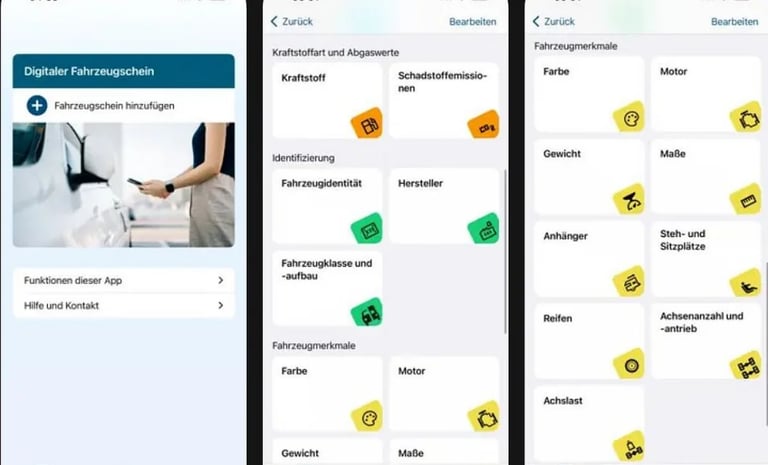

Germany launches the i-Kfz app, a digital Fahrzeugschein that lets drivers store and present their vehicle registration on a smartphone, accessible after downloading data via the online-enabled ID card function.
Using the feature requires an active eID and PIN, the vehicle’s license plate to be entered, and the app is a joint effort by the BMVI, KBA, and Bundesdruckerei.
A key capability is sharing the digital Fahrzeugschein with others via a QR code or internet link, with time-limited access and offline viewing of downloaded documents.
Past security concerns around digital wallets, including a 2021 digital driving license hack, underscore the need for robust protections in the new system.
There is a proposed ban on handling or trading traffic-violator points, with penalties up to 30,000 euros for commercial offenses.
ADAC and police union GdP praise the digital approach for efficiency and convenience but warn of uneven nationwide training, fake or damaged documents, and that real-time cross-checks with official databases are not fully in place.
GdP highlights uneven preparedness across police forces and the risk of forgery, calling for real-time cross-checks with official databases.
Overall, the move signals a broader push toward digital vehicle and driver information management, with plans to expand functionality beyond digitizing registrations.
The government aims to roll out the national digital driving license by late 2026 and a broader Digital Wallet for documents by early 2027, with an EU-wide license target of 2030.
Cabinet-approved legislation lays groundwork to digitize traffic administration, setting the path for nationwide i-Kfz and a digital driver’s license by the end of 2026.
There remains a transitional requirement to carry the paper Fahrzeugschein in the car due to varying awareness and ongoing legal changes.
The proposal includes digitizing parking controls using license-plate scans to improve efficiency and safety and aid in identifying blocked routes.
Summary based on 7 sources