New Clownfish Species Discovered in French Polynesia: Amphiprion maohiensis Revealed
November 5, 2025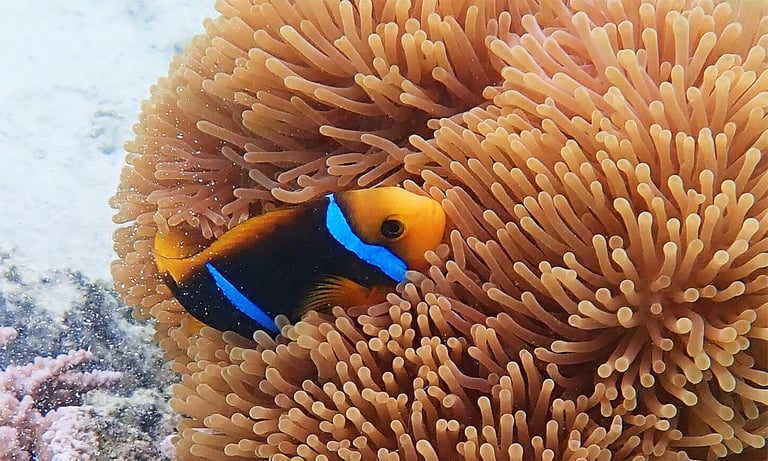

A new clownfish species, Amphiprion maohiensis, has been identified in French Polynesia, evident from two distinct color morphs observed across the Pacific and a unique light-to-dark orange body with two pale bars and orange fins and tail.
The species is morphologically distinctive, with morphometric differences such as longer dorsal and pectoral fins that set the Polynesian population apart from western Pacific relatives.
In this mutualism with the magnificent sea anemone, the fish gains protection while the anemone benefits from cleaning and feeding, aided by a chemical defense in the fish mucus that reduces the risk of the anemone’s stinging cells.
Genetic analyses, including mitochondrial DNA and whole-genome sequencing, show clear divergence between populations (about 1.5% in mtDNA and 27.7 million variable sites genome-wide), supporting species separation and dating the split to roughly 1.5 million years ago.
The discovery underscores that reef fishes may harbor unrecognized diversity, and precise taxonomy is crucial for biodiversity surveys and shaping protective policies.
Citizen science and local monitoring are highlighted as essential for identifying and protecting the new species, enabling better management and conservation actions.
The species is named Amphiprion maohiensis in honor of the Polynesian term maohi, with the host anemone identified as Radianthus magnifica.
Field sampling covered French Polynesia, Micronesia, Papua New Guinea, and the Solomon Islands, analyzing 800 diver photographs and 565 physical specimens to assess tail color variation and broader distribution.
Summary based on 1 source
Get a daily email with more Science stories
Source

Earth.com • Nov 4, 2025
Divers find a new clownfish species living inside poisonous tentacles of a sea anemone