30 New Sea Species Discovered: Deep-Sea Expedition Unveils Southern Ocean Wonders
November 6, 2025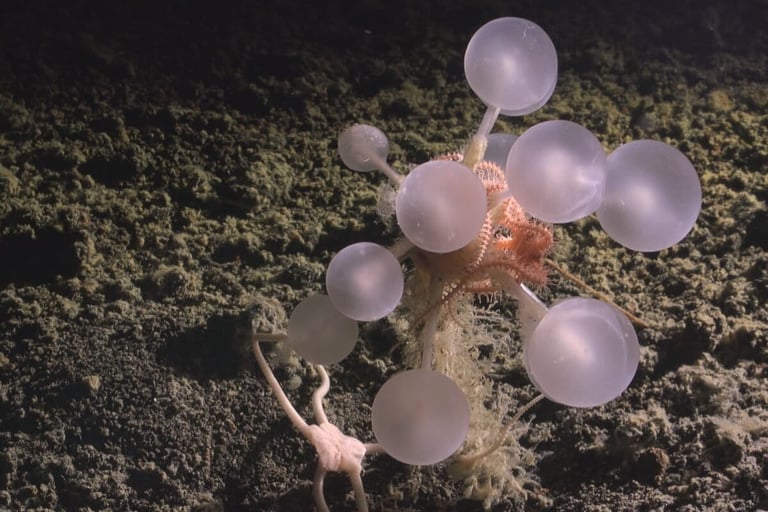

Dr. Jyotika Virmani notes that coordinated expeditions, workshops, and advanced technology—such as precise seafloor mapping and high-definition ROV imagery—are driving discoveries while keeping scientific rigor.
The Southern Ocean remains extremely undersampled and remote, underscoring the need to protect its fragile ecosystems as researchers expand our knowledge.
Two main sites drove the work: hydrothermal vents near the South Sandwich Islands and a Bellingshausen Sea area exposed after a large iceberg calved, with the latter site revealing a previously isolated marine community and the first juvenile sighting of a colossal squid.
Since 2023, Ocean Census has confirmed over 800 new species across 13 expeditions and publishes findings openly via the Ocean Census Biodiversity Data Platform.
Footage captured the first in situ sighting of a juvenile colossal squid at about 600 meters depth, expanding understanding of its natural behavior.
A deep-sea expedition in the Southern Ocean has documented 30 previously unknown species, including a predatory death-ball sponge, armored and iridescent scale worms, new sea stars, and novel crustaceans, at depths up to about 700 meters.
The finds span two expeditions this year and include rare gastropods and bivalves adapted to hydrothermal habitats, as well as potential new black corals and sea-pen genera.
Experts stress that rapid documentation supports conservation planning, biodiversity research, and policy efforts under frameworks like the 2023 Agreement on Marine Biodiversity of Areas Beyond National Jurisdiction.
International collaboration powered the work, bringing together the Nippon Foundation–Nekton Ocean Census, Schmidt Ocean Institute, the GoSouth consortium, and the U.K.-administered South Georgia and the South Sandwich Islands government.
To accelerate discovery, on-site workshops and rapid DNA barcoding shortened the pathway to describing new species from years to a tighter, rigorous process.
Observers warn that exploration often outpaces understanding and highlight threats like pollution, invasive species, seafloor mining, and trawling that could jeopardize these ecosystems as knowledge grows.
Summary based on 3 sources
Get a daily email with more Science stories
Sources
Smithsonian Magazine • Nov 3, 2025
Researchers Discover 'Death Ball' Sponge and Dozens of Other Bizarre Deep-Sea Creatures in the Southern Ocean
Mongabay Environmental News • Nov 5, 2025
Armored worms and death-ball sponges among array of life newly documented from the deep sea
Good News Network • Nov 6, 2025
Bizarre Deep-Sea Creature Named ‘Death Ball’ Sponge Discovered in Remote Corner of the Planet