Breakthrough Study Reveals Key Role of Galectin-3 in Placental Cell Fusion and Pregnancy Health
November 6, 2025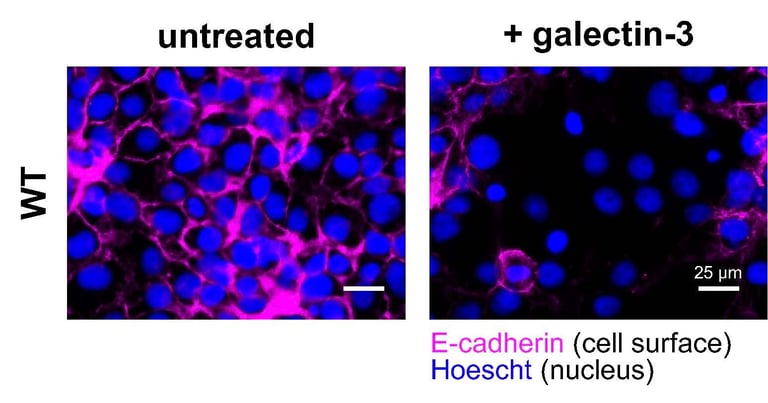

Researchers aim to confirm how the placental development process works and explore interventions that might prevent pregnancy complications by modulating galectin-3, with plans to apply proximity labeling to other cell types to study protein–sugar interactions more broadly.
Galectin-3 must cluster at the cell surface to drive fusion; engineered galectin-3 unable to cluster or oligomerize fails to induce syncytialization, indicating a multivalent crosslinking mechanism that stabilizes membrane contacts over roughly 48 hours.
The clustering of galectin-3 appears to bring CD9 glycoproteins together to form a rigid, fused cell surface structure, a process that requires galectin-3 oligomerization and persists for about two days.
Overall, galectin-3’s ability to cluster and oligomerize is essential for placental cell fusion, pointing to a mechanism that accelerates membrane remodeling during syncytialization.
Key collaborators include Abigail Reeves (first author) and Mia Huang (senior author) of Scripps Research, with contributions from the University of Florida and support from NIH grants and the Burroughs Wellcome Foundation.
Proximity labeling in placental-like cells identified CD9 and ITGB1 as consistent galectin-3 partners, with CD9 bearing a unique glycosylation site relevant to the interaction.
The fusion process forms the multinucleated placental syncytium that supports nutrient exchange and immune modulation, linking failures to pregnancy complications.
The study demonstrates a new proximity labeling technique to map protein–sugar interactions in the placenta, published in the Proceedings of the National Academy of Sciences, and lays groundwork for validating these processes in human placentas to address pregnancy complications.
Findings reinforce that specific protein–glycan interactions can profoundly influence cell behavior and placental biology, suggesting potential clinical applications.
Disrupting either CD9 or ITGB1 impairs placental cell fusion, marking these proteins as critical functional counter-receptors for galectin-3 during syncytialization.
A new study from Scripps Research identifies galectin-3 as a key driver of placental cell fusion in early pregnancy, a process essential for forming the maternal–fetal barrier.
The placenta forms a continuous barrier early in pregnancy, enabling nutrient and oxygen exchange and immune tolerance, while improper formation elevates risks like preeclampsia and fetal growth restriction.
Summary based on 3 sources
Get a daily email with more Science stories
Sources
Medical Xpress • Nov 5, 2025
Sugar–protein interactions, critical for placenta during early pregnancy, shed light on common complications
News-Medical • Nov 6, 2025
Galectin-3 found to drive crucial cell fusion in early placental development
BIOENGINEER.ORG • Nov 5, 2025
Scripps Research Team Discovers Sugar Molecules Key to Initiating Placental