NTNU's SmartNav Revolutionizes Urban Navigation with Breakthrough 10cm GPS Accuracy for Autonomous Vehicles
October 12, 2025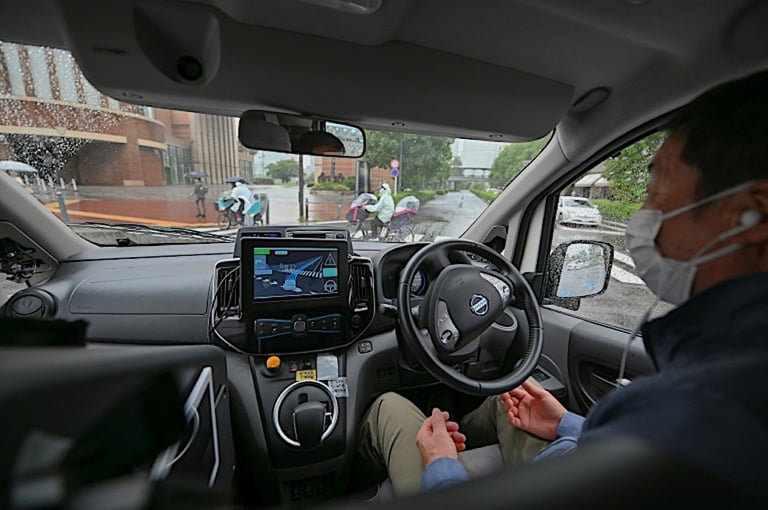

By leveraging these multiple technologies, SmartNav offers a navigation solution that surpasses conventional GPS, promising more dependable urban navigation for autonomous vehicles and other platforms.
The adoption of PPP-RTK technology is expected to become widespread and affordable, reducing reliance on dense base station networks and making high-precision GPS accessible to everyday users.
Researchers at NTNU, led by Ardeshir Mohamadi, have developed SmartNav, an advanced navigation system that integrates multiple correction technologies to significantly improve GPS accuracy for autonomous vehicles operating in urban environments.
This innovative system achieved a positional accuracy of better than ten centimeters during urban testing, making it reliable for city navigation despite the challenges posed by dense infrastructure.
SmartNav combines radio wave analysis, RTK, PPP-RTK, and Google’s 3D building models to correct signal disruptions caused by urban canyons, reflections, and obstructions.
While traditional RTK correction services provide high accuracy, they are costly and limited to professional use, whereas PPP-RTK, supported by the European Galileo system, offers a more affordable and scalable alternative for mass-market devices.
Google’s 3D building models are utilized to predict and correct signal reflections in densely built-up areas, enhancing the precision of urban navigation across nearly 4,000 cities worldwide.
The research detailing SmartNav has been published in the Journal of Spatial Science, with future studies focusing on expanding high-precision positioning to smartphones and mass-market applications.
Urban canyons created by tall buildings disrupt standard GPS signals through reflection and blockage, leading to positional inaccuracies that pose challenges for autonomous vehicle navigation.
The use of the carrier phase of radio waves, which provides high accuracy, is integrated with RTK and PPP-RTK corrections, especially effective near base stations or with satellite systems like Galileo.
Summary based on 2 sources
Get a daily email with more Science stories
Sources

ScienceDaily • Oct 10, 2025
Why GPS fails in cities. And how it was brilliantly fixed
Digital Journal • Oct 11, 2025
SmartNav: Overcoming GPS weaknesses in cities