First South American Amber Discovery Unveils 112-Million-Year-Old Insect Treasure Trove
October 12, 2025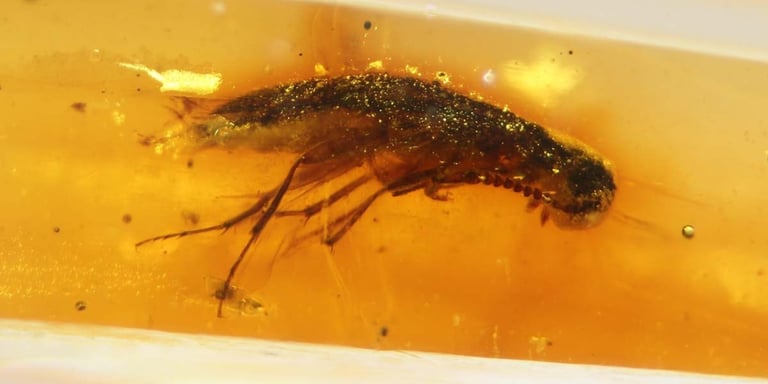

Scientists have discovered the first South American amber deposits containing well-preserved insects in an Ecuadorian quarry, dating back approximately 112 million years to the Cretaceous period.
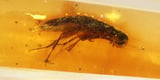
This amber, formed from fossilized tree resin, preserves over 20 insect species, including flies, wasps, a springtail, and a beetle, marking a significant find in South America.
The discovery provides a rare glimpse into a 112-million-year-old forest ecosystem on the ancient supercontinent Gondwana, characterized by warm, humid conditions and dense vegetation.
The find enhances understanding of the region's paleobiogeography and the broader evolutionary history of life on Gondwana, with similar deposits potentially revealing more about ancient climates and ecosystems.
The amber deposit is notably rich, with thousands of pieces within a 70-centimeter layer, offering a unique window into a transitional period when forests shifted from conifer-dominated to flowering plant ecosystems.
The amber is part of the Hollín Formation in Ecuador's Oriente Basin, providing insights into the ancient environment and climate of the region during the Cretaceous.
This discovery is particularly significant because most ancient amber deposits studied previously were in the Northern Hemisphere, making this a critical resource for understanding Southern Hemisphere ecosystems during the breakup of Gondwana.
Surrounding rock samples contained plant fossils such as spores and pollen, further enriching the understanding of the ancient environment.
This find is one of the few fossils from Gondwana in the region, indicating the area was once a humid forest teeming with diverse life.
Researchers plan to continue studying the amber collection to uncover more about the life and environmental conditions of the Cretaceous period and the drifting apart of ancient continents like South America and Africa.
Previous amber discoveries include specimens from Myanmar and France, with the oldest dating back over 320 million years, highlighting the significance of amber in studying ancient life.
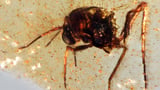
Analysis of 60 amber samples from the site revealed a diverse range of insects, including flies, parasitic wasps, beetles, ants, and even a fragment of spider web, providing detailed insights into prehistoric biodiversity.
Summary based on 2 sources
Get a daily email with more Science stories
Sources
ScienceDaily • Oct 11, 2025
Scientists unearth a 112-million-year-old time capsule filled with ancient insects