Mutant p53 Insights: Tailoring Immunotherapy for Enhanced Cancer Treatment
November 6, 2025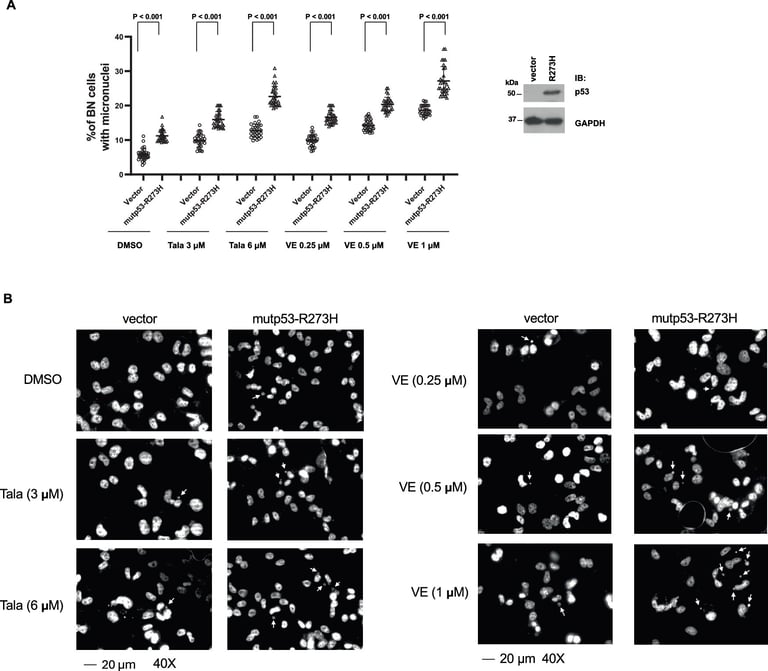

The study shows that identifying specific p53 mutations in tumors can help predict how well immunotherapy will work and guide personalized treatment strategies.
Future clinical validation is needed, but findings open avenues to tailor cancer treatment based on precise p53 mutation profiles.
A Baylor College of Medicine study found that not all p53 mutations are the same; R273H (contact) can drive replication overdrive and genomic instability, which paradoxically activates the cGAS-STING immune pathway.
Findings support testing combination therapies that target replication initiation pathways alongside immunotherapy to boost anti-tumor immunity in tumors with mutant p53, especially the R273H variant.
The R273H mutation could serve as a biomarker to tailor immunotherapy, improving patient selection and response rates for checkpoint blockade in p53-mutant cancers.
In contrast, the R175H mutant drives cancer growth but does not trigger an immune response, highlighting mutation-specific effects on tumor behavior and therapy.
The R175H mutation does not activate the cGAS-STING pathway, leading to weaker immune engagement and potential immune evasion by tumors carrying this mutation.
The conformational R175H mutation promotes tumor growth without triggering the same immune activation, underscoring the importance of mutation type for disease behavior and therapy.
The R273H mutation hyperactivates replication initiation, driving aggressive tumor growth while also activating the cGAS-STING pathway to recruit innate and adaptive immunity, including CD8+ T cells.
R273H leads to over-firing of replication initiation by binding to TopBP1 and Treslin, causing micronuclei and cytoplasmic DNA that trigger cGAS-STING–driven inflammation.
Experts emphasize high-resolution mutational profiling to guide personalized cancer treatment and the development of agents targeting p53-mutant replication machinery to turn immunologically cold tumors hot.
Mouse models of breast cancer with the R273H mutation show stronger responses to immune checkpoint inhibitors, with increased CD8+ T-cell infiltration and evidence of immune-mediated tumor destruction.
Future directions include testing additional p53 variants and combining immunotherapy with inhibitors of DNA replication regulators like TopBP1, PARP, or ATR.
Researchers observed that contact mutp53 upregulates MRE11, releasing cGAS from micronuclei and amplifying immune signaling, linking replication stress to immune activation.
Summary based on 3 sources
Get a daily email with more Science stories
Sources
Medical Xpress • Nov 5, 2025
Certain p53 mutations may make tumors more vulnerable to immunotherapy
BIOENGINEER.ORG • Nov 5, 2025
Certain p53 Mutations May Aid in Cancer Combat, Study Finds
Inside Precision Medicine • Nov 5, 2025
How a p53 Mutation Can Sensitize Tumors to Immunotherapy