Texas Confirms New Screwworm Cases, USDA Intensifies Eradication Efforts as Cross-Border Risk Grows
June 8, 2026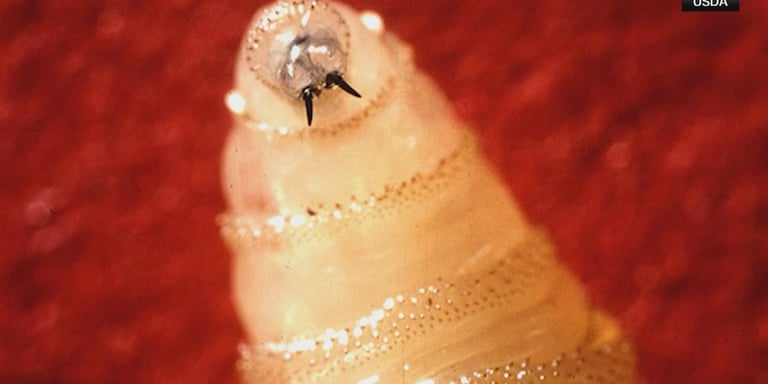


Two more New World screwworm cases have been confirmed in Texas—a calf in La Salle County and a dog in Andrews County—with the dog likely having recently traveled from Mexico, underscoring the cross-border risk.
The core control strategy remains releasing sterile male flies to mate with wild females, producing no offspring and gradually eradicating outbreaks.
USDA officials warn the spread threatens the U.S. cattle industry and are intensifying eradication efforts, including boosting sterile-fly production and building a fly facility in Texas.
USDA advises ongoing surveillance and outreach to producers, veterinarians, and communities, and provides guidance to PMPs on recognizing livestock symptoms.
USDA and APHIS have issued updates and responses, including emergency actions and continuous monitoring of the outbreak.
The outbreak poses a persistent threat to livestock, pets, wildlife, and occasional human risk, demanding vigilance and rapid response across the region.
Alabama officials reiterate this is an animal-health issue, not a food-safety concern, with no confirmed cases in the state and preparedness already in place.
Authorities emphasize animal health risk, ongoing surveillance, and the importance of prompt veterinary reporting of suspicious signs.
The response reflects a coordinated federal and agricultural-industry effort aimed at stopping the outbreak before it causes widespread damage.
Public guidance urges owners to inspect livestock and pets for wounds, maggots, or lesions and to contact veterinarians or officials if infestations are suspected.
Alabama reiterates no state cases and advises statewide surveillance, urging farmers to monitor for unusual larvae and maintain wound hygiene.
Farmers are advised to monitor animals closely, keep wounds clean and covered, and report suspicious larvae on living animals to veterinarians or state authorities.
Summary based on 25 sources
Get a daily email with more World News stories
Sources

AP News • Jun 8, 2026
Texas finds 2 new cases of screwworm, a flesh-eating cattle parasite | AP News
The Guardian • Jun 8, 2026
US confirms three new cases of flesh-eating screwworm in livestock
Spectrum News 1 South Texas / El Paso • Jun 8, 2026
2 more Texas screwworm infections found in animals far apart, USDA says
The Independent • Jun 8, 2026
A parasite that devours living flesh is spreading in Texas—and officials are racing to stop it