Peru's Presidential Race: Fujimori and Sánchez Neck-and-Neck as Final Votes Counted
June 8, 2026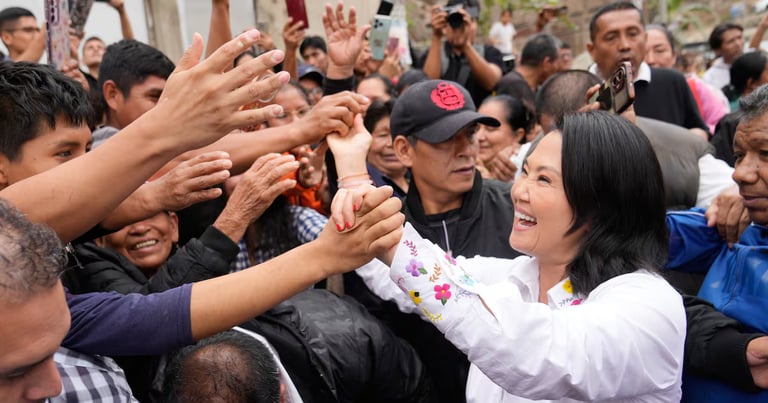

Fujimori supporters push for a fundamental political and economic shift, including deregulation and a hard line on crime and migration, drawing on her father's controversial legacy.
Observers note ongoing uncertainty about the final outcome and the potential for a lengthy proclamation process, given connections to former presidents and related political events.
Analysts warn Sánchez’s proposed economic reforms, such as mining-concession policies, could affect investor sentiment and introduce risk if he wins.
Supporters from both camps gathered in Lima with cautious optimism, acknowledging Peru's history of political instability and rapid turnover since 2016.
Both candidates advocate pro-business or investment-friendly foreign policy stances, with neither clearly aligning against major powers like the United States or China.
Foreign policy signals show openness to global trade partners rather than a bloc alignment, avoiding a sharp pivot toward any single power.
The result is expected to trigger post-election turbulence, including possible recounts and disputes over irregularities, with no broad political pact in sight and continued distrust in Congress.
Voter priorities center on crime and the economy, with a trend toward more conservative policy preferences as the election unfolds.
In the Peru presidential runoff, Keiko Fujimori and Roberto Sánchez remain in a razor-thin race with 93% of ballots counted, Fujimori slightly leading at about 50.095% to Sánchez's 49.905%, roughly 8.75 million votes for Fujimori versus 8.73 million for Sánchez.
Geographic results show Sánchez ahead in the Amazon and highlands, while Fujimori leads in coastal regions and Lima, underscoring a deep regional split in the country.
Counting is expected to continue narrowing the margin as final rural ballots are tallied, where Sánchez had stronger support.
Neither candidate is projected to hold a parliamentary majority, making coalition-building essential to govern and amplifying security concerns amid crime and extortion issues.
Summary based on 25 sources
Get a daily email with more World News stories
Sources

AP News • Jun 8, 2026
Keiko Fujimori and Roberto Sánchez in tight race for Peru's presidency | AP News
Ediciones EL PAÍS S.L. • Jun 8, 2026
Peru’s Roberto Sánchez and Keiko Fujimori urge caution as vote count continues in very tight presidential election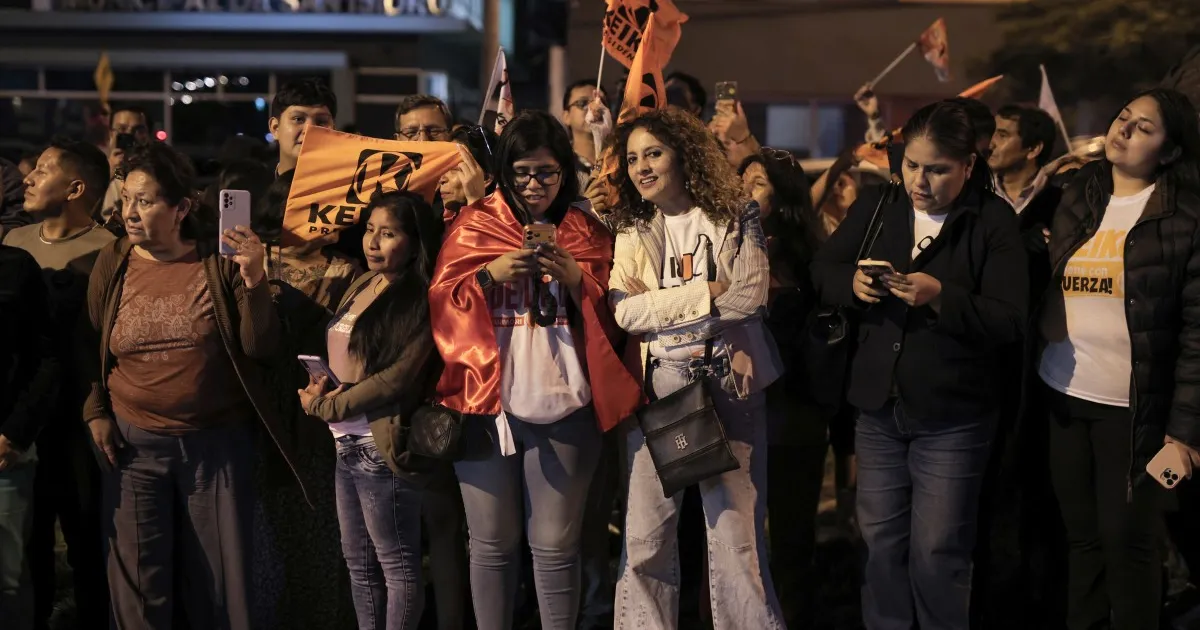
Al Jazeera • Jun 8, 2026
Race tied between left- and right-wing rivals in Peru’s presidential vote
Ahram Online • Jun 8, 2026
Peru presidential runoff too close to call - International - World