Delhi Chokes Under Toxic Smog: PM2.5 Levels 30 Times the Safe Limit
November 4, 2026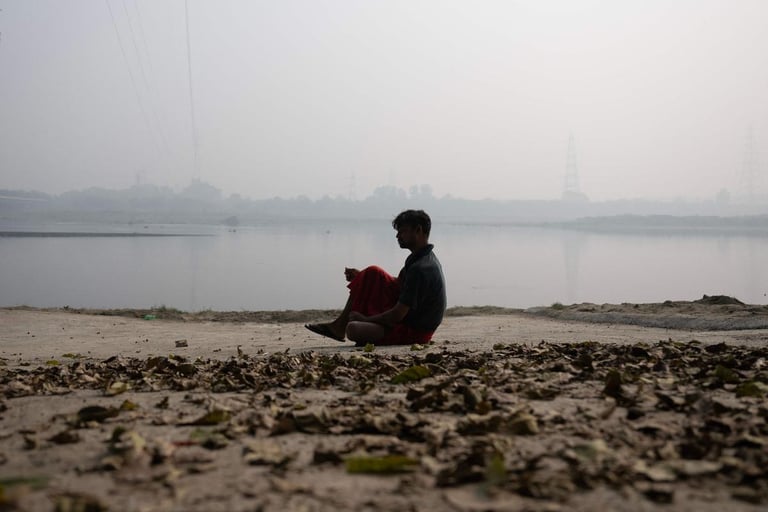

Diwali firecracker smoke added to New Delhi’s seasonal pollution, pushing the air quality index above 350 in several areas on Monday morning—a level classified as severe and harmful to health.
The pollution also comes from vehicles, industry and construction dust, while low winds and stagnant conditions in late October and November trap pollutants near the ground.
Fine particulate matter is especially concerning because PM2.5 can penetrate deep into the lungs and bloodstream; the article cites the WHO’s annual exposure guideline of 5 µg/m³.
Pulmonologists Dr Arvind Kumar and former AIIMS director Dr Randeep Guleria advise older adults and people with lung, heart, chronic or immune-related conditions to stay indoors and avoid outdoor exercise.
For practical protection, people can check local air-quality readings, avoid strenuous outdoor activity and peak traffic hours, keep windows shut during high-pollution periods, and consider a properly sized HEPA air purifier.
When going outside, a well-fitted N95 or N99 mask can filter fine particles, but not gases; it should cover the nose, mouth and chin and be replaced when dirty or difficult to breathe through.
People should continue prescribed medication and consult a doctor if symptoms worsen; breathing difficulty, bluish lips or unusual lethargy in a child require immediate medical attention.
Guleria said hospital visits often rise four to six days after air quality sharply worsens, with some patients needing nebulisation, short courses of steroids or increased oxygen.
Authorities have used hybrid schooling, work-from-home arrangements and vehicle restrictions during severe pollution episodes, alongside limits on construction and diesel generators.
Longer-term government plans include phasing out older vehicles, expanding cleaner fuels and closing regional coal-fired power plants.
Public health expert Shweta Narayan described the response as “knee-jerk” and “temporary,” arguing that cleaner energy and stricter vehicle-emission controls are needed to prevent the pollution from returning each year.
Personal precautions can help, but sustained government action to control pollution sources—and affordable protection and health care for vulnerable people—remain essential.
Summary based on 47 sources