DeepSeek's Open-Source AI Model Disrupts Market, Boosts Demand for Inference Chips and Smaller Firms
February 7, 2025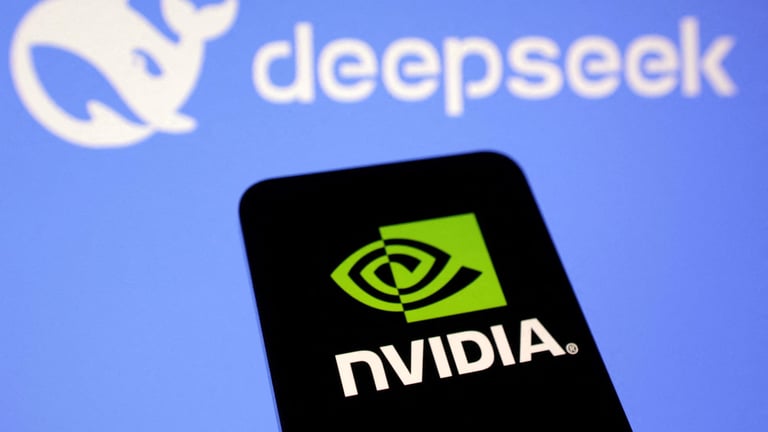

The AI chip market is witnessing a surge in demand for inference chips, driven by the adoption of DeepSeek's open-source model, which is seen as a trend towards more efficient and cost-effective solutions.
DeepSeek's R1 model is positioned as a competitive alternative to leading American technologies, offering cost-effectiveness without the need for advanced graphic processing units, although some experts express skepticism about its capabilities.
The introduction of DeepSeek's latest AI model has notably affected Nvidia's market capitalization, creating new growth opportunities for smaller AI companies.
In response to DeepSeek's advancements, companies are shifting their budgets from training clusters to inference clusters, as highlighted by Robert Wachen, co-founder of Etched.
According to Sid Sheth, CEO of AI chip startup d-Matrix, DeepSeek's innovations indicate that smaller models can achieve performance levels comparable to larger proprietary models at reduced costs.
DeepSeek's innovations are expected to accelerate the transition from AI training to inference, which involves applying AI models to practical, real-world tasks.
Analysts predict that DeepSeek's engineering breakthroughs will not only lower inference costs but also enhance overall training expenses, positively impacting the AI chip landscape.
Andrew Feldman emphasized that the growth of the AI market will be characterized by multiple players, as the rise of open-source models challenges traditional hardware and software monopolies.
Many AI firms view the emergence of DeepSeek as a beneficial shift, allowing them to transition from costly models like those from OpenAI to more affordable open-source alternatives.
Wedbush forecasts a sustained increase in AI adoption among enterprises and consumers, which will favor smaller chip manufacturers like Groq, as Nvidia struggles to meet the growing demand alone.
The demand for less powerful chips for inference is creating new opportunities for AI chip startups, as noted by equity analyst Phelix Lee.
This trend aligns with Jevon's Paradox, where reductions in technological costs lead to increased demand, further propelling growth in the AI market.
Cerebras Systems, under CEO Andrew Feldman, has reported a significant uptick in demand for its services following the release of DeepSeek's R1 model.
The shift towards open-source models in AI is reminiscent of historical trends in the PC and internet markets, where price reductions facilitated widespread adoption.
Summary based on 1 source