Breakthrough in Exoplanet Imaging: Solar Gravitational Lens Set to Revolutionize Space Observation
November 25, 2025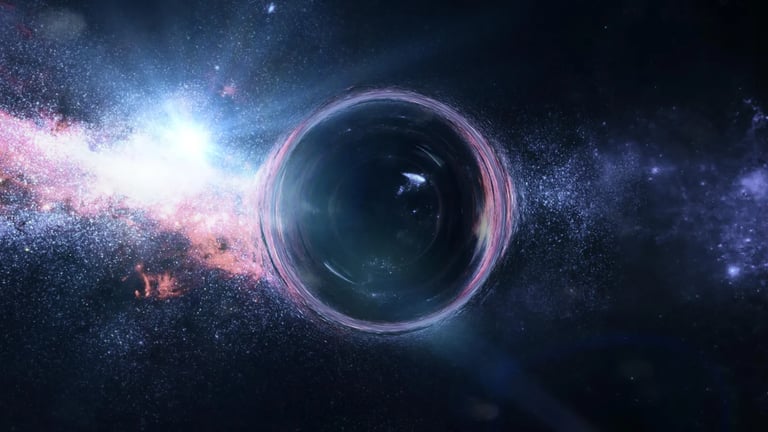

The imaging process with the Solar Gravitational Lens positions a spacecraft near the focal region and uses the Einstein Ring from lensing to scan a projected image pixel by pixel, potentially up to 100 x 100 pixels or more over time.
Power and propulsion begin with a solar sail or electric sail phase to establish thrust and topology, followed by possible jettisoning of sails and panels, with later power supplied by radioisotope generators as the spacecraft moves farther from the Sun.
There are two major international efforts exploring the same gravity-lensing principles: a NASA-led concept studied under the Innovative Advanced Concepts program, and a European collaboration associated with Pisa and the Curved Space Telescope idea.
Cost estimates for a full SGL imaging program vary widely, ranging from a few billion dollars for focused missions to potentially tens of billions, with pathfinder missions around 1.2 billion and full campaigns around 5 billion.
The projected timeline envisions an initial launch and first light by the mid-2030s for an early demonstration, with a complete exoplanet imaging campaign potentially realized by the mid- century.
Flight times to the focal region are lengthy, estimated from about 25 years with solar sails to up to 70 years for mass-constrained missions, underscoring the need for autonomous operations and durable funding.
A Solar Gravitational Lens telescope would exploit the Sun’s gravity at a focal distance of roughly 650 astronomical units to enable highly detailed imaging of exoplanets, distant galaxies, and black holes.
Initial targets are expected to be Earth-like exoplanets tens of light-years away, with imaging capable of resolving tens of kilometers on the planet’s surface.
The concept relies on general relativity and Einstein rings to collect and distort light, projecting a light amplification around 100 billion to make direct imaging of exoplanet surfaces feasible.
A key technical hurdle is maintaining precise alignment; the spacecraft must endure drift between focus positions and operate autonomously due to long data delays back to Earth, up to about 80 hours.
Summary based on 1 source
Get a daily email with more Tech stories
Source

Forbes • Nov 25, 2025
A Solar Gravity Lens Telescope Would Revolutionize Astronomy