Revolutionizing Immune Health: Autophagy's Role in T Cell Division and Mitochondrial Inheritance
December 19, 2025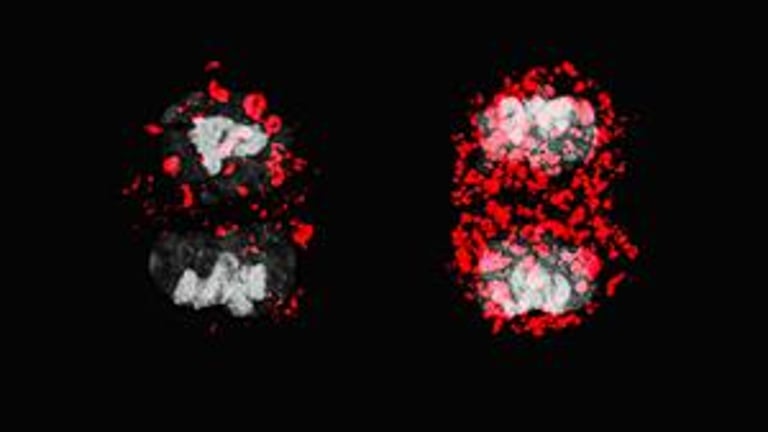

Autophagy acts as a cellular housekeeping mechanism that drives asymmetric cell division in T stem cells, shaping T cell fate.
Disrupting autophagy disrupts mitochondrial inheritance, causing both daughters to inherit damaged mitochondria and favoring the effector fate for both cells.
The findings could inform strategies to rejuvenate aging immune systems and improve vaccine efficacy, with future work validating results in human T cells.
Researchers propose that enhancing autophagy or modulating one-carbon metabolism could rejuvenate the aging immune system and strengthen vaccine-induced protection.
Plans are in place to validate these findings in human T cells to explore translational potential for vaccines and boosting immune memory.
There is causal evidence that autophagy influences asymmetric cell division and mitochondrial inheritance, highlighting autophagy as a potential therapeutic target to preserve memory T cells, especially with aging.
During T cell division, daughter cells inherit differently aged mitochondria: one daughter remains mitochondrially clean through autophagy and becomes a long-lived memory precursor, while the other inherits damaged mitochondria and becomes a short-lived effector T cell.
A novel MitoSnap mouse model was used to label and track maternal versus daughter mitochondria, showing that autophagy clears old mitochondria from one daughter to promote memory-precursor development.
The study linked mitochondrial age and autophagy to cell fate outcomes by tracking mitochondria from mother to daughter cells.
Single-cell analyses reveal that effector cells with damaged mitochondria rely on one-carbon metabolism, offering a therapeutic angle to shift toward memory cell fate.
Multi-omic profiling shows effector cells with damaged mitochondria depend heavily on one-carbon metabolism, suggesting another route to steer T cell fate toward memory cells.
Differential mitochondrial inheritance primes memory precursors to survive longer and mount rapid responses upon re-exposure, while effector cells respond immediately but are short-lived.
Summary based on 2 sources
Get a daily email with more Science stories
Sources
EurekAlert! • Dec 19, 2025
What determines the fate of a T cell?
Medical Xpress • Dec 19, 2025
What determines the fate of a T cell? Research highlights cellular 'housekeeping' mechanism