Breakthrough Discovery: Dual-Function Allosteric Site in TRPM5 Ion Channel Revolutionizes Drug Research
January 5, 2026

A new study identifies a single allosteric site in the TRPM5 ion channel that can both activate and inhibit the channel depending on the bound molecule, reframing TRPM5 regulation around a unified site with dual functionality.
Led by Ruan and colleagues, the research presents a groundbreaking finding on TRPM5, a calcium-permeable channel involved in taste, temperature, and pain sensing, highlighting the site's ability to unify activation, modulation, and inhibition.
The findings carry broader implications for drug discovery across the TRP channel family, suggesting therapeutic avenues for taste disorders, diabetes-related taste changes, chemotherapy-induced taste alterations, and calcium signaling diseases.
This work deepens understanding of TRPM5 regulation within sensory pathways and may inform future studies of its roles across wider biological systems.
TRPM5 is part of the TRP ion channel family that participates in sensory processes such as temperature detection, pain perception, and taste signaling.
Future research is expected to reassess regulation in other ion channels, map allosteric sites across the TRP family, and develop targeted pharmacological interventions that leverage unified allosteric regulation to improve specificity and reduce side effects.
Functional experiments show that allosteric modulators can enhance or suppress TRPM5 activity depending on cellular conditions, indicating potential for designing taste-modulating drugs and treating related neurological conditions.
A multidisciplinary approach combining computational modeling with experimental data demonstrates the flexibility of TRPM5 under physiological conditions, underscoring advances in structural biology to understand ion channel regulation.
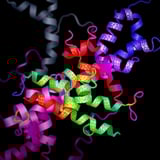
Cryo-EM structural analysis reveals the allosteric site’s strategic placement and dynamic nature, enabling responsiveness to physiological cues and influence over channel behavior.
The study positions the allosteric site as a signaling junction that coordinates multiple pathways, potentially explaining complex regulation within taste and broader calcium signaling networks.
Overall, the allosteric site functions as a multifunctional hub, allowing TRPM5 to adapt across diverse cellular contexts and stimuli and challenging traditional bifurcated views of activation versus regulation in ion channels.
Summary based on 2 sources