NASA's Dragonfly Rotorcraft Heads to Titan: Key Tests Underway for 2028 Launch
January 26, 2026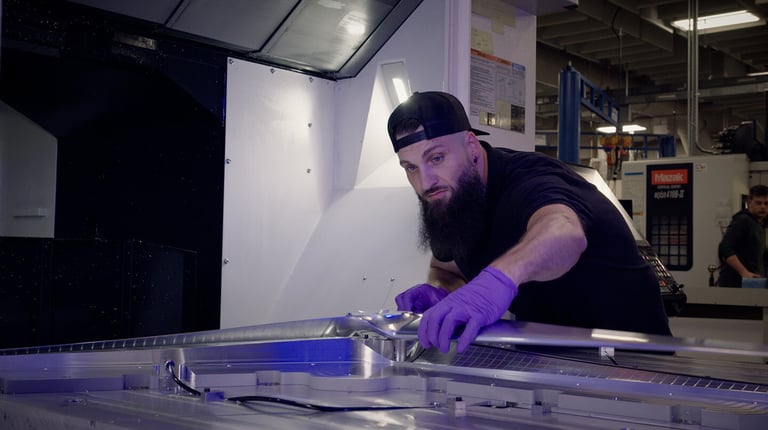

NASA’s Dragonfly is a car-sized rotorcraft designed to explore Titan, with a 2028 launch window and an arrival around 2034.
Aerodynamic testing and ground validation are underway for Dragonfly, with recent campaigns at NASA Langley’s Transonic Dynamics Tunnel to assess rotor performance under Titan-like conditions.
Elizabeth Turtle of APL highlights the mission’s innovation and collaboration as work continues toward a 2028 launch and a sense of pride in the team’s accomplishments.
Rotors are central to Dragonfly’s mission; initial rotors were machined beginning in late 2024 using waterjet cutting and iterative fabrication, with full-scale spin tests completed before transport to Langley for further testing.
Dragonfly is a rotorcraft mission headed to Saturn’s moon Titan, planned for launch in 2028 and arrival around 2034, to explore diverse Titan environments including organic dunes and a crater that may have hosted liquid water and organics.
The mission aims to fly to multiple Titan locations to study varied environments, such as organic dunes and a crater where liquid water and complex organics may have coexisted.
Lead rotor engineer Felipe Ruiz and APL teams emphasize precise manufacturing and ground testing to ensure flawless rotor performance in Titan’s atmosphere, where there is little room for error.
Over five weeks in 2025, researchers evaluated Dragonfly rotor performance under Titan-like conditions, focusing on rotor stress, vibration effects, and aerodynamics to ensure reliability during entry and descent.
Dragonfly exemplifies broad collaboration among APL, Penn State, Sikorsky, NASA Langley, multiple NASA centers, universities, and international space agencies as part of NASA’s New Frontiers Program.
The spacecraft is designed and built at Johns Hopkins APL with international contributions, and Langley’s TDT is used for critical aerodynamics and aeroelastic testing.
Dragonfly is being built at APL in Laurel, Maryland, with global collaboration across academia, industry, and international space agencies.
Rotors will undergo fatigue and cryogenic tests at Titan-like temperatures (about −290°F / −178°C) before final production for flight.
Summary based on 2 sources
Get a daily email with more Science stories
Sources

Phys.org • Jan 26, 2026
Flight engineers give NASA's Dragonfly lift
Johns Hopkins University Applied Physics Laboratory • Jan 23, 2026
Flight Engineers Give NASA’s Dragonfly Lift