Study Links Higher Cancer Deaths to Proximity of Nuclear Power Plants, Urges Further Research
February 24, 2026


A Harvard-led study analyzing U.S. mortality data from 2000 to 2018 finds higher cancer death risks for people living closer to functioning nuclear power plants than those farther away.
In the 65–74 age group, attributable cancer deaths due to proximity are highest for both sexes, with females at 13,976 deaths and males at 20,912 deaths within that band, acknowledging uncertainty intervals; older ages bear the largest overall burden.
The findings echo an earlier Massachusetts study showing higher cancer incidence near nuclear facilities, reinforcing a consistent pattern while noting study limitations.
The study details data sources (EIA plant locations, CDC mortality data), covariates (education, income, poverty, race, density, climate, smoking, BMI, healthcare access, age 65 metrics, housing), and a GEE Poisson regression approach with population offset and robust standard errors, plus ethical oversight.
Sensitivity analyses confirm the results are robust across alternative distance cutoffs (100–200 km) and proximity windows (2–20 years), indicating findings are not driven by arbitrary parameter choices.
Proximity is quantified as the sum of inverse distances to all plants within 200 km, averaged over a 10-year window and summed across plants to yield a county-level proximity score, capturing cumulative exposure.
Authors present a national study using a novel continuous exposure metric to capture cumulative proximity effects across the U.S. and over nearly two decades, and call for further research to clarify causality and public health implications.
The report situates findings within the broader policy context of nuclear energy promotion and health risk assessments related to plant proximity.
Using EIA plant locations and CDC county-level cancer mortality data, researchers controlled for education, income, race, temperature, humidity, smoking, BMI, and distance to the nearest hospital.
A national dataset combines CDC cancer mortality data (2000–2018) with U.S. EIA plant locations (and nearby Canadian facilities within 200 km), adjusting for multiple county-level covariates to account for confounding factors.
Published in Nature Communications, the study attempts to control for smoking, BMI, age, hospital access, income, poverty, and race/ethnicity, yet the proximity-cancer association persists.
Nuclear power is often framed as cleaner than fossil fuels, but the authors stress the need for more research into potential health impacts as nuclear expansion proceeds.
Summary based on 3 sources
Get a daily email with more Tech stories
Sources

Forbes • Feb 24, 2026
Does Living Near A Nuclear Plant Increase Deaths From Cancer?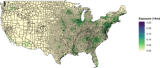

ScienceDaily • Feb 24, 2026
Massive US study finds higher cancer death rates near nuclear power plants