Ancient Roman Writing Tablets Unearthed in France Reveal Hidden Life of Provincial Town
March 14, 2026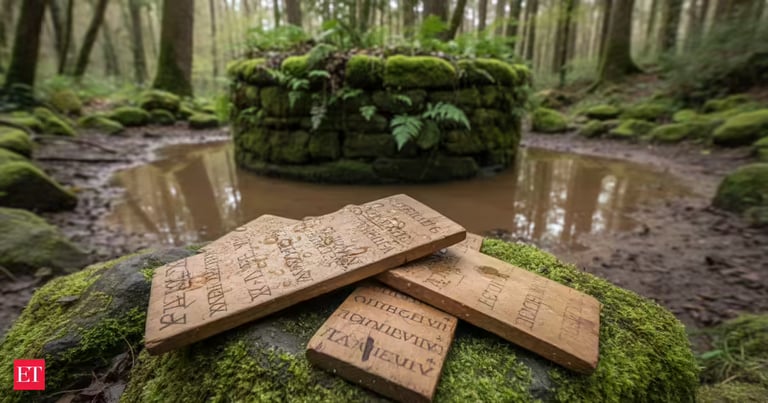

A 2025 archaeological discovery in Izernore, eastern France, uncovered at least fifteen ancient wooden writing tablets preserved in waterlogged wells, offering rare insight into life in a Roman provincial town.
The tablets, dating to the Roman period, likely served administrative, commercial, or educational purposes and were found with other wooden objects such as combs, boxes, spindle whorls, and child shoe soles, signaling everyday life and family presence in the town.
Izernore, known in Roman times as Isarnodurum, was an active urban hub on trade routes between Lugdunum and Alpine passes to Italy, functioning as a regional commercial and religious center with temples, bathhouses, workshops, and homes uncovered during excavations.
The exceptional preservation results from the wells’ waterlogged, low-oxygen environment, which slowed wood decay and created a natural time capsule for artifacts that would normally decay.
An exhibition titled “Well of Knowledge: 240 Years of Excavations in Izernore” was organized to showcase the discovery and demonstrate how ordinary wooden objects illuminate broader historical narratives, including literacy, craftsmanship, and family life in Roman Gaul.
The Izernore find is often compared to the Vindolanda Tablets in Britain, underscoring that written communication existed across the Roman Empire and highlighting literacy and record-keeping in provincial settlements.
Archaeologists believe the tablets were locally manufactured, with unfinished pieces and woodworking debris suggesting domestic production, and the town likely sourced wood from nearby forests to support crafts and administrative needs.
Summary based on 1 source
Get a daily email with more Science stories
Source

Economic Times • Mar 14, 2026
A Roman Town’s Lost Documents Were Found In France