Metformin Shows Promise in Achieving ART-Free HIV Remission, New Study Reveals
March 23, 2026

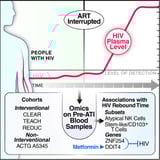
Researchers analyzed blood samples from 75 ART-interruption trial participants to identify immune-cell features associated with delayed HIV rebound, aiming to understand mechanisms that keep the virus suppressed without ART, with a comprehensive multiomic approach to PBMCs across cohorts.
If successful, these strategies could lead to functional cures or therapies that minimize lifelong ART and reduce inflammation driven by viral activity.
Metformin treatment raised DDIT4 expression and suppressed HIV in primary cells from ART-suppressed individuals, suggesting an affordable, scalable approach to promote HIV silencing and ART-free remission.
The findings support pursuing both immune-based and HIV-silencing approaches to achieve ART-free HIV remission, including strategies that leverage metformin to silence HIV.
Higher levels of stem cell memory CD8+ T cells correlated with longer rebound delays in two trials, indicating these cells may replenish themselves and help sustain ART-free HIV control.
Atypical natural killer (NK) cells were linked to later rebound in another trial, suggesting multiple immune cell types contribute to post-ART control.
Preclinical testing is planned for metformin and related compounds across models to evaluate their ability to prevent reservoir-derived HIV reactivation during ART interruptions.
The HOPE Collaboratory is advancing a broader program toward HIV functional cure by leveraging epigenetic and immune-cell–based strategies to maintain latent HIV and reduce inflammation in people living with HIV on ART.
Nadia Roan and colleagues’ study in Immunity examines why a small subset of people can control HIV after stopping ART and how this could inform new treatments.
Within reservoir CD4+ T cells, DDIT4 and ZNF254 were associated with longer rebound times, and experiments confirmed both genes can suppress HIV, making them potential targets for a block-and-lock strategy.
RNA sequencing linked mTOR pathway regulator DDIT4 and zinc finger transcription factor ZNF254 to delayed rebound, with functional data showing HIV suppression in vitro and in vivo.
Delayed rebound did not depend on the size of the intact HIV reservoir but on cohort-specific immune effectors, including atypical NK cells and durable CD103+ T cells.
Summary based on 2 sources