Vancouver Airport Aims to Double Cargo Capacity by 2030 with $150M Infrastructure Boost
April 13, 2026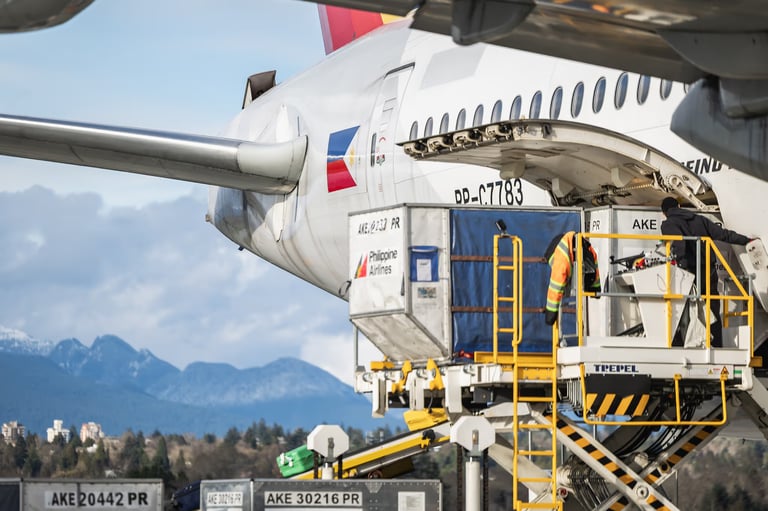

Improved passenger routes are expected to subsidize and enable greater cargo capacity, reinforcing the interdependence of passenger growth and cargo expansion.
Vancouver International Airport is targeting a doubling of cargo volumes to about 730,000 tonnes per year by 2030, positioning cargo as a core pillar to spur regional economic growth.
A $150 million cargo infrastructure program will boost capacity, including a 160,000-tonne expansion by 2027, upgrades to the taxiway and cargo apron, and a new cargo warehouse, with $74 million of federal funding secured in 2024.
Airport leadership says that faster, more consistent, and larger-scale cargo and passenger operations will attract integrators and freight forwarders, reducing costs and benefiting both large shippers and SMEs as YVR aims to become a true global cargo hub.
YVR closed 2025 with a record 365,000 tonnes of cargo and 26.9 million passengers, highlighting strong momentum though still trailing world leaders such as Hong Kong and Singapore.
Geopolitical shifts in Asia-Europe routing, notably through the Gulf, are funneling more cargo through YVR as a stable Trans-Pacific gateway seeking to strengthen Asia–North America–Europe connectivity.
To support growth, the airport is expanding its cargo ecosystem alongside increased flights and a digitized, more efficient logistics network, with about 60% of cargo moving in passenger bellies and 40% on freighters.
YVR is fast-tracking digitalization of cargo operations to replace paper-based processes, creating a seamless platform for Canadian businesses to participate in global supply chains.
Target markets include Vietnam, where there is interest in direct Canada–Vietnam air links; YVR sees significant trade and tourism potential but notes urgency as Asian partners may not wait for Canada’s slower decision-making.
Summary based on 1 source