Nationwide Economic Blackout Planned by Unions and Activists on May Day 2026
April 30, 2026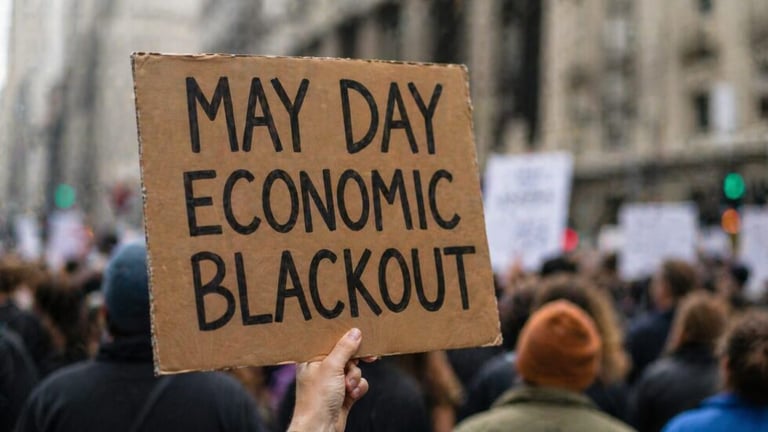

Minneapolis inspired the effort, with organizers seeking to elevate worker power and move toward broader disruptions similar to general strikes in other countries.
On May Day, a broad coalition of labor unions, democratic organizations, and community groups across the United States plans a large-scale economic blackout to protest government policies seen as prioritizing billionaires over workers, with events anticipated in more than 3,000 locations nationwide.
The movement urges no work, no school, no shopping as part of a coordinated nationwide action on May 1, 2026, aiming to demonstrate economic power and disrupt daily life.
Organizers cite actions from the Trump era—such as proposed ICE deployments to polling places and foreign policy moves—as catalysts that have mobilized broader solidarity and cross-community participation.
The operation features coordinated worker abstention, school walkouts, consumer boycotts, street demonstrations, and a unified focus on immigration and labor demands.
organizers expect more than 3,000 actions across major cities including Chicago, Los Angeles, and Minneapolis, reflecting rapid growth of labor-immigration coalitions.
The initiative builds on a prior Minnesota ICE operation and aims to cultivate worker solidarity and consciousness toward potential general strikes.
The movement aims to build long-term organizing infrastructure for sustained economic disruption as a democratic tool to defend communities and democracy.
From traditional rallies to a coordinated, multi-sector mobilization, the campaign now involves unions, immigrant rights groups, and grassroots organizations focusing on economic disruption as leverage.
In Los Angeles, the LA May Day coalition—comprising over 50 organizations—focuses on immigration and voting rights, ICE abolition, and labor rights, with endorsements surpassing 100 groups this year.
Organizers underscore historical ties to immigration and labor activism and stress uniting diverse groups—unions, nonprofits, grassroots, and faith-based groups—around shared demands.
They emphasize increased mobilization and the linking of labor rights with immigrant rights and democratic participation to widen support.
Summary based on 3 sources
Get a daily email with more US News stories
Sources

The Guardian • Apr 28, 2026
US activists plan May Day economic blackout: ‘No school, no work, no shopping’
SSBCrack News • Apr 30, 2026
Labor Unions and Community Groups Organize Economic Blackouts for May Day Protests - SSBCrack News
The WP Times • Apr 30, 2026
May Day economic blackout protests spread across US