Meta's AI Wearables Transform Accessibility for Disabled Users with Innovative Features and Partnerships
May 18, 2026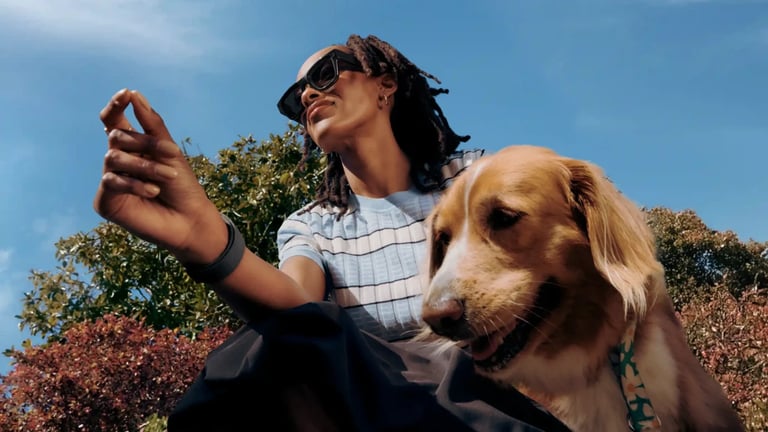

On Global Accessibility Awareness Day, Meta will host an accessibility event at Meta Lab NYC in partnership with Lighthouse Guild and Achilles International to offer hands-on experiences with Oakley Meta Vanguard, featuring a Bike Club demonstration and blind leadership involvement in adaptive tech development.
Meta AI glasses are positioned as practical assistive tools enabling hands-free calls, messaging, translation, environment description, text reading, photo/video capture, and access to assistance services.
Voice controls will be added for calls across WhatsApp, Messenger, and Instagram, integrated directly into the call experience.
Meta’s AI wearables, including Ray-Ban Meta and Oakley Meta Vanguard, are boosting independence and safety for people with disabilities, with real-world testimonials from veterans who are blind and a quadriplegic founder leveraging hands-free features.
The overarching message is a commitment to accessible technology that supports daily life activities—navigation, communication, photography, and athletic participation—with ongoing feature expansion and partnerships to broaden impact.
The devices emphasize voice interaction and hands-free operation to assist users with limited mobility, blindness, low vision, or veterans needing daily support.
Collectively, the initiatives aim to broaden Meta’s wearable tech beyond social networking to enhance independence and daily life for users with disabilities.
New hands-free features include Be My Eyes live video calls, voice-controlled call management, one-touch feature shortcuts, and real-time captions during calls across Meta platforms.
Real-time captions on Ray-Ban Display glasses now appear on the in-lens screen during calls on major platforms.
Meta is collaborating with Carnegie Mellon University on a three-year program to explore electromyography via the Neural Band, enabling people with spinal cord injuries to interact with devices by translating forearm muscle signals into actions.
A Cass demonstrates EMG control during a race in a game, illustrating how forearm muscle signals can drive device interactions for those with spinal cord injuries.
The Neural Band uses EMG signals from the forearm to perform digital actions, offering potential benefits for users with mobility impairments.
Summary based on 3 sources
Get a daily email with more AI stories
Sources
Meta Newsroom • May 18, 2026
Our AI Wearables Are “Changing the Game” for Disabled People
Social Media Today • May 18, 2026
Meta highlights AI glasses functions for users with disabilities
Techgenyz • May 18, 2026
Meta AI Glasses Are Becoming Practical Assistive Tools for Disabled Users