ZFP36L2 Loss Shifts Colorectal Cancer Cells to Aggressive Non-Canonical Paths
August 8, 2026

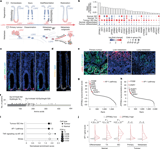
When ZFP36L2 is lost, metastatic CRC cells shift away from the ISC-dedifferentiation program toward non-canonical fates, with markers such as CK5 and CHGB rising and LGR5 declining in patient metastases and organoid models.
Credit for the work goes to Dr. Karuna Ganesh and the Memorial Sloan Kettering Cancer Center team, with the full Nature article accessible via the provided link.
A key stress-responsive mediator, ZFP36L2 links AP-1 driven injury programs to intestinal cell dedifferentiation back to LGR5+ intestinal stem cells, a process vital for regeneration and for canonical metastasis in colorectal cancer.
Overall, ZFP36L2 coordinates stress-induced dedifferentiation into an ISC state, promoting epithelial regeneration and enabling cancer stem cell–like transitions during metastasis; its absence biases cells toward non-canonical, potentially more invasive differentiation paths.
The study highlights the complex role of cancer cell-state transitions in metastasis and suggests that disrupting these transitions may have unexpected biological consequences compared with prior expectations.
Loss of ZFP36L2 impairs metastatic seeding but drives tumors to adopt alternative, more plastic differentiation programs linked to poorer clinical outcomes.
ZFP36L2 acts by coordinating degradation of stress-related mRNAs, connecting stress responses, RNA biology, and cellular plasticity to cancer progression.
Summary based on 2 sources
Get a daily email with more Science stories
Sources
Nature • Aug 5, 2026
ZFP36L2 orchestrates stress-adaptive plasticity in regeneration and cancer
Oncodaily - Oncology News, Insights, Stories • Aug 8, 2026
Yan Leyfman: New Insights Into Cancer Cell Plasticity in Colorectal Cancer - OncoDaily