India's Energy Dilemma: Balancing US Imports and Russian Oil Amid Potential Sanctions
August 8, 2026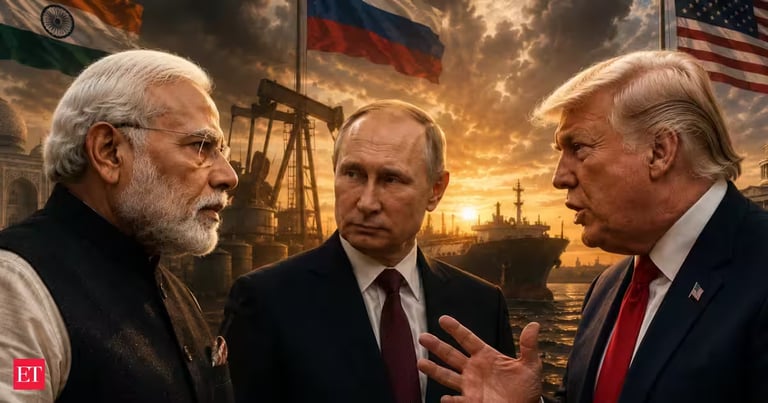

India is increasing imports of US energy alongside Russian crude, LNG, LPG, and petroleum coke, signaling growing economic ties that could complicate any tariff-based leverage on Russia.
The Senate version of the sanctions bill awaits House action, and identical legislation must be filed by both chambers before it can go to the President for signature.
Although the Senate approved the measure, it still must clear the House to become law.
India could diversify sourcing to over 40 countries—including Venezuela, Iraq, Saudi Arabia, the UAE, the U.S., West Africa, Brazil, and Guyana—but fully replacing Russian volumes would incur higher costs and longer shipping amid Middle East tensions.
Beyond tariffs, the GTRI warns that tariffs are increasingly used as strategic pressure, which could raise costs for Indian exporters and undermine the benefits of discounted Russian crude, with the final outcome dependent on House action and the sanctions bill's passage.
India faces a policy dilemma: retain access to cheaper Russian oil while risking new US tariffs on its exports, as Washington may use energy access to influence Indian trade behavior.
The Senate passed the Lindsey O. Graham Sanctioning Russia and Iran Act of 2026 by an overwhelming margin, potentially enabling up to 100% tariffs on countries continuing to buy Russian energy, pending House approval.
The proposed act would authorize up to 100% tariffs on major Russian-energy importers, with reviews of top buyers every 180 days and exemptions for those sourcing less than 15% of energy from Russia or taking concrete steps to reduce dependence.
If enacted, the tariffs would target the world’s top five Russian-energy buyers and would be layered on existing duties, with levels tied to changes in those countries’ Russian energy purchases.
Top Russian energy importers include China, India, Slovakia, Hungary, and Azerbaijan, marking where tariffs could apply or be enforced.
The proposed tariffs would apply to those remaining as major buyers of Russian oil or gas, with rates varying based on shifts in their Russian energy purchases.
A 1/3 reduction in Russia-related imports for India would be difficult, potentially requiring replacing 0.8–1.0 million barrels per day and raising annual import costs by up to $1.8 billion.
Summary based on 3 sources
Get a daily email with more World News stories
Sources

Economic Times • Aug 8, 2026
India’s $40 billion Russian oil lifeline shouldn’t buckle under Trump’s 100% tariff threat: GTRI
Economic Times • Aug 8, 2026
India’s $40 billion Russian oil lifeline shouldn’t buckle under Trump’s 100% tariff threat: GTRI
Observer Voice • Aug 7, 2026
India’s Response to Trump’s Tariff Threat: Continued Purchases of Russian Crude Oil