Revolutionary Platform Unlocks Deep-Sea Microbiomes, Preserving Life at Extreme Depths
September 12, 2026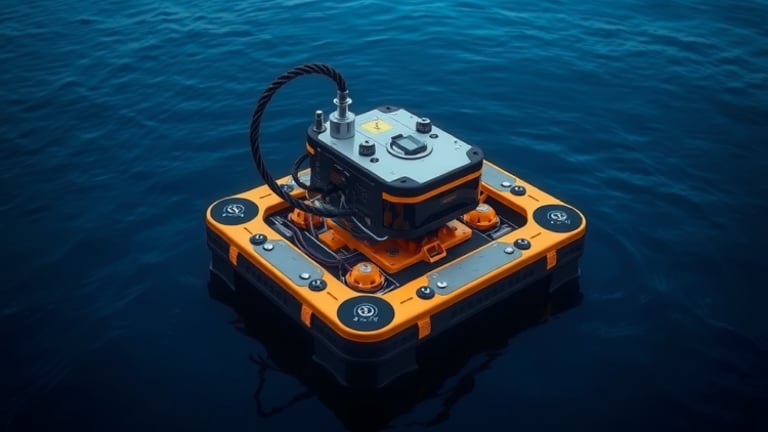

A cyber-physical, closed-loop platform enables in situ isolation of deep-sea extremophiles, preserving native microenvironments from sampling through culture by avoiding decompression and surface exposure.
This approach fits a broader trend of bringing laboratory capabilities into field instruments, supporting long-duration observatories that monitor ecosystem responses to climate-related changes over years.
The system continuously senses pressure, temperature, and chemistry and uses onboard software to autonomously control pumps, valves, and high-pressure chambers in real time, ensuring pressure-retentive handling throughout the workflow.
By expanding access to piezophilic and psychrophilic enzymes and metabolic pathways, the platform offers biotechnological potential while aligning bioprospecting with conservation-minded engineering.
Provenance matters: each culture would come with detailed records of the environmental conditions experienced during growth.
In situ cultivation addresses the great plate count anomaly by enabling growth of organisms that resist conventional lab cultivation due to the challenge of reproducing hydrostatic pressure and local chemistry.
Maintaining hydrostatic pressure, temperature, and chemical context is crucial because piezophiles and cold-adapted microbes are destabilized by surface conditions, including microbial interactions within consortia.
Robotic high-pressure manipulation enables subsampling, dilution, inoculation, and colony selection without human intervention, allowing cultures to be established under native conditions and returned as living cultures.
Closed-loop sensing supports real-time decision-making to capture transient deep-sea events, creating cultivation archives of living specimens and improving data continuity.
Challenges include durable deep-sea hardware resistant to corrosion and biofouling, and the need for flexible autonomous cultivation protocols for unknown organisms.
Overall significance: the platform could shift deep-sea microbiology toward studying living ecosystems in their native contexts, unlocking microbial dark matter and informing ecology, evolution, and biotechnology.
Key reference: Nature Sensors article by Feng et al. (2026) detailing the closed-loop in situ isolation approach, with the DOI provided.
Summary based on 1 source
Get a daily email with more Science stories
Source
BIOENGINEER.ORG • Sep 12, 2026
Sensor-Driven Robotic Platform Brings Deep-Sea Extremophile Isolation Into