Argonne Leads AI-Driven Autonomous Labs for Faster Biological Breakthroughs in DOE Genesis Mission
September 14, 2026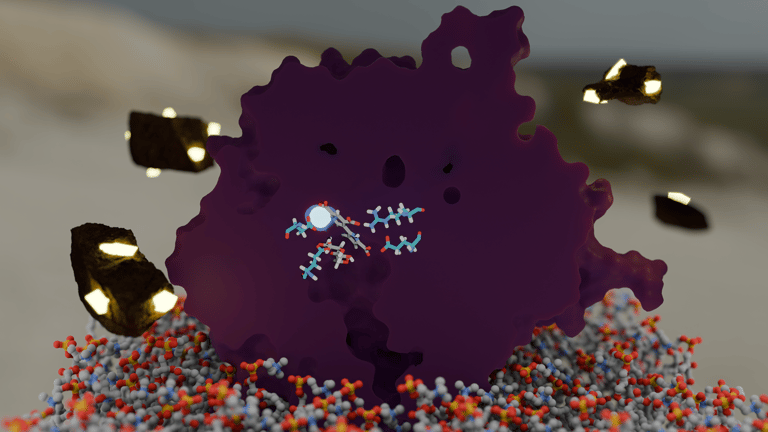

Argonne National Laboratory is leading three DOE Genesis Mission projects—OPAL, IdeA, and MELT-REE—that integrate artificial intelligence with autonomous laboratories to accelerate biological discovery.
Together, the projects demonstrate a new model for science that is faster, smarter, and scalable across institutions by combining autonomous experimentation, AI-driven reasoning in biology, and practical biotechnological applications like enzyme design and resource recovery.
All three projects are funded by the DOE Office of Science, Biological and Environmental Research program, aligning AI innovation with real-world biotechnological and materials applications.
MELT-REE explores bioleaching with microbes to extract rare-earth elements from waste streams, leveraging AI-driven optimization to overcome chemical leaching limitations.
MELT-REE investigates bioleaching of rare-earths from mine tailings and electronic waste, addressing environmental and cost concerns by pairing self-driving labs with AI analysis to optimize microbial pathways for industrial-scale extraction.
MELT-REE uses microbes to bioleach rare-earth elements, tackling challenges like acid inhibition and low feedstock concentration through high-throughput lab screening combined with AI to optimize microbial pathways for scale.
IDEA aims to compress enzyme-design timelines from years to weeks by deploying AI agents that read millions of papers, search databases, compare structures, generate hypotheses, and reason about biology while resolving disagreements to maintain trustworthiness, with ORNL contributing to data generation.
IdeA builds AI agents that can search literature and databases, generate hypotheses, and reason about biology to accelerate enzyme design and biosynthetic pathway optimization, starting with nylon-like biopolymers.
IDEA develops biologically reasoning AI that can read vast literature and data to rapidly design and optimize enzymes, ensuring trustworthy, reproducible results by resolving disagreements among AI agents.
OPAL seeks to create a self-driving laboratory network across four national labs to autonomously design, dispatch, monitor, and adjust biological experiments, using humanoid robots to handle tasks beyond traditional liquid-handling automation.
OPAL aims to enable a self-driving network of laboratories that can design, execute, monitor, and adapt experiments autonomously, with humanoid robotics handling complex lab tasks.
OPAL envisions a four-lab network where AI-driven design, execution, and optimization of biological experiments are conducted by autonomous systems and humanoid robots.
Summary based on 3 sources
Get a daily email with more AI stories
Sources
Newswise • Sep 14, 2026
Argonne puts artificial intelligence to work on biology’s big challenges | Newswise
Argonne National Laboratory • Sep 14, 2026
Argonne puts artificial intelligence to work on biology’s big challenges