Targeting BIRC6 Reverses Aging in Stem Cells, Boosts Immunity in Mice
September 23, 2026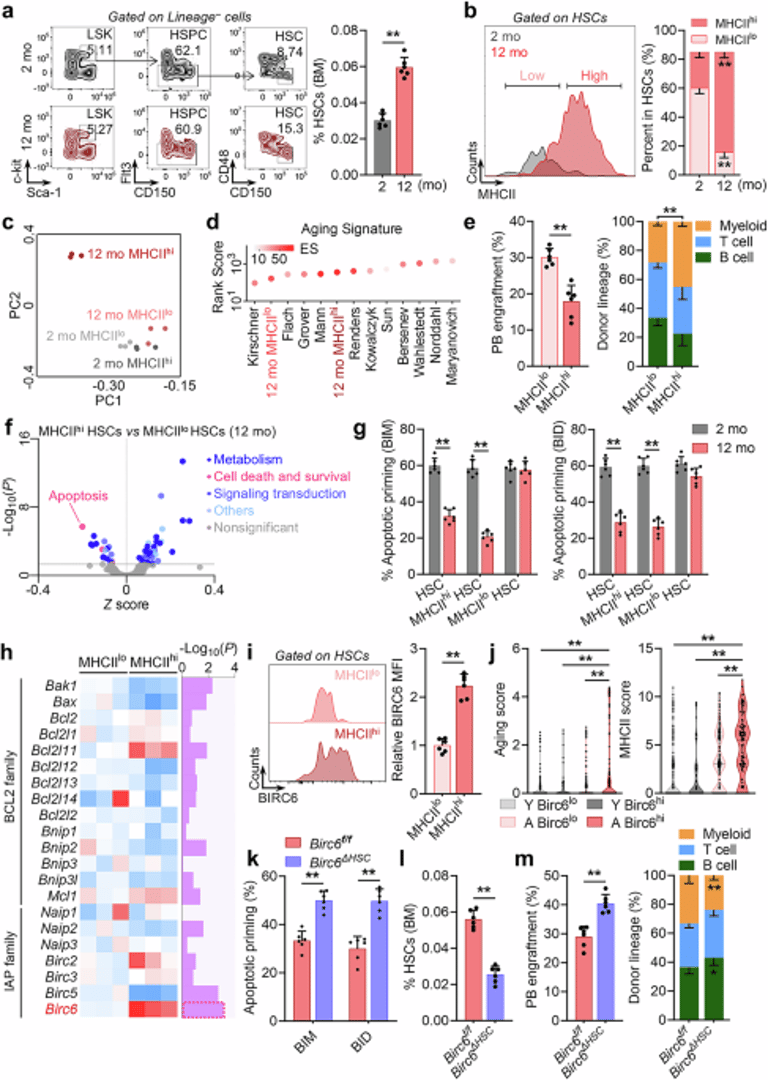

Aging in hematopoietic stem cells is linked to upregulation of BIRC6, which lowers apoptotic priming and promotes aging phenotypes, driven by niche regulatory T cells through a cAMP–PKA–CREB signaling axis.
BIRC6 signaling emerges as a central regulator of aged HSC survival and immunosenescence, with a therapeutic strategy using LNP-delivered antisense oligonucleotides targeting BIRC6 shown to rejuvenate the HSC compartment and systemic immune function in aging.
Conditional deletion of Birc6 specifically in HSCs reverses aging features by increasing apoptotic priming and improving HSC function in middle-aged mice, confirming BIRC6's causal role in aging phenotypes.
In middle-aged mice, inhibition of BIRC6 enhances functional immunity, including a 22-fold increase in antibody titers to a SARS-CoV-2 Spike vaccine and improved germinal center responses, memory B cells, and T follicular helper cell dynamics, approaching youthful levels.
LNP-ASO treatment in middle-aged mice restores youthful immune features by expanding naive T cells and mature B cells, rebalancing lymphoid and myeloid compartments, reducing exhausted T cell phenotypes, and lowering systemic inflammatory cytokines such as IL-1α, IL-1β, and CXCL5.
In middle-aged mice, BIRC6high HSCs exhibit higher aging scores, increased MHCII expression, and a myeloid-skewed differentiation pattern, suggesting aged HSCs gain a survival advantage under BIRC6-driven signaling.
Summary based on 1 source
Get a daily email with more Science stories
Source
Nature • Sep 23, 2026
Targeting BIRC6 rejuvenates hematopoietic stem cell aging and immunosenescence