Breakthrough Recycling Method Revolutionizes Durable Plastic Waste Management
October 3, 2026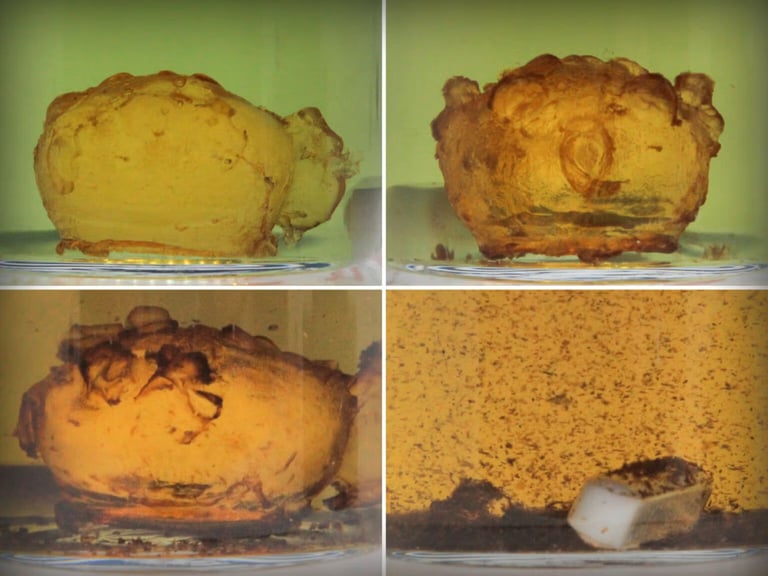

A joint team from the University of Texas at Austin and Sandia National Laboratories has developed a low-waste chemical method to break down durable pDCPD plastics, which are traditionally hard to recycle.
The process dissolves the plastic into a solution while leaving behind a reusable powder and isolatable reinforcing fibers (such as carbon or glass) in pristine form for reuse.
Compared with incineration, the method uses less energy and generates less waste, signaling a potential circular life cycle for pDCPD materials.
Researchers identified ring-closing metathesis and chain transfer pathways as part of the catalytic fragmentation, providing a detailed mechanistic understanding of how pDCPD breaks down under this process.
The findings were published in Science Advances, highlighting the potential to expand recycling options for hard-to-recycle plastics and reduce environmental impact.
The method relies on a green solvent, cyclopentyl methyl ether, and a ruthenium-containing catalyst to deconstruct pDCPD thermosets and composites via metathesis-based chemistry, enabling recovery of fibers and reusable plastic powder.
pDCPD is a high-durability plastic used in vehicle bumpers, construction equipment, and chemical storage tanks, whose recycling has historically been costly due to its durability and structure.
Summary based on 1 source
Get a daily email with more Science stories
Source
The Weather Network • Oct 3, 2026
Scientists find effective way to dissolve a recycling-resistant plastic