Generative AI Revolutionizes Life Sciences: Transforming Workflows and Enhancing Healthcare Decisions
November 6, 2026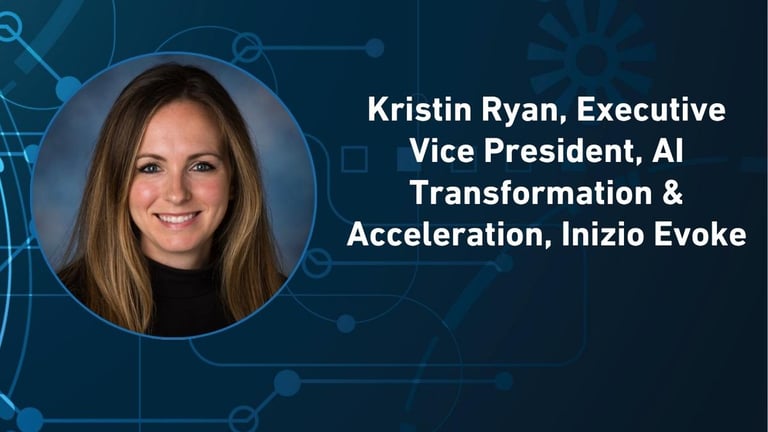

The real value from generative AI in life sciences lies in redesigning workflows to connect insights, strategy, content, activation, and measurement into a seamless system, rather than merely speeding up individual tasks.
Sustained progress requires investment in people, training, governance, incentives, and ongoing evaluation to decide what to refine, scale, or stop, with value measured by improved patient information access and better-informed decisions by healthcare professionals.
Regulatory and governance considerations are increasingly critical, with January 2026 seeing joint FDA and EMA principles for good AI practice that emphasize human-centric design, defined context of use, risk-based oversight, data governance, and lifecycle management.
Agentic AI, which coordinates tasks across systems and maintains context, could shift AI from a tool to a coworker, potentially augmenting or automating 75%–85% of pharmaceutical workflows while still requiring human oversight.
A more connected workflow would preserve context and evidence across handoffs, enabling insights to inform strategy, content development, activation, and through-field feedback loops to refine future planning.
Leaders should begin with one priority workflow, establish clear ownership and success metrics, and measure impact beyond time saved by improvements in quality, reduced rework, and faster responsiveness to patient and HCP needs.
The article cites Kristin Ryan of Inizio Evoke and references McKinsey and BCG to support its arguments.
Today’s AI use in commercialization improves task efficiency but often lacks transformational value due to siloed processes and weak handoffs between teams.
The next phase treats workflows as the unit of transformation, effectively creating an organizational central nervous system powered by AI to coordinate across functions.
Summary based on 1 source
Get a daily email with more AI stories
Source

Pharmaceutical Commerce • Nov 6, 2026
The AI Efficiency Trap: Why Faster Tasks Alone Won’t Transform Life Sciences