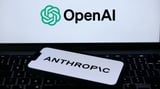
Anthropic Pledges Up to $100 Billion to Help People Disrupted by AI—But Critics Question the Plan
November 9, 2026

Anthropic plans to put 5% of its shares, plus further contributions linked to the company’s growth, into a company-owned Public Benefit Fund aimed at helping people affected by AI-driven economic disruption. If Anthropic reaches a projected US$2-trillion valuation at a public listing anticipated as early as November, the initial stake could be worth about US$100 billion; founders’ pledges and employee donation matching could raise the share devoted to public purposes to roughly one-fifth.
The proposal arrives as rapidly growing AI fortunes are being framed as the start of a third major era of American philanthropy, following industrial-era giving and the wealth generated by the early internet.
OpenAI’s own foundation holds a 26% stake in OpenAI, valued at about US$130 billion during a restructuring a year ago—more than the Gates Foundation’s total endowment.
OpenAI has also committed US$250 million through its foundation to grants and direct work placements for people navigating AI disruption, and has distributed US$50 million so far to organizations including local-journalism groups.
Anthropic has suggested its fund could pay workers displaced by AI, but identifying those affected would be difficult, and any payments should supplement—not replace—public supports such as unemployment insurance and retraining.
Economists and policy experts question whether the fund will directly help affected workers, saying the proposal lacks detail and could function as public relations while helping Anthropic shape or head off government regulation.
Rafael Gomez of the University of Toronto said the plan may reassure audiences while pre-empting regulation, while Barry Eidlin of McGill University saw it as an effort to preserve corporate influence over how rules are crafted.
That influence matters in a policy vacuum: Canada has no dedicated AI guardrail laws, and the United States has no single comprehensive AI law comparable to the European Union’s AI Act.
Anthropic and OpenAI are public benefit corporations, with mandates to pursue investor returns alongside public benefit; economist Rosalie Wyonch said their funds and foundations may reassure investors and governments while reducing pressure for direct regulation.
Anthropic’s fund is housed in an LLC owned by the corporation, rather than an independent nonprofit foundation, so it is not subject to the same mandatory annual distributions and public tax disclosures. Anthropic says it will avoid lobbying and political giving and report on its activities.
Anthropic’s founders and senior staff have ties to effective altruism, which emphasizes measurable impact and includes causes such as AI safety, global health and poverty alleviation; observers warn that large donations to selected causes could redirect nonprofit priorities or crowd out other needs.
Gomez pointed to a Canadian steel-sector partnership between producers and the United Steelworkers, formed in 1986 to address job displacement from technological change and offshoring, as an example of industry, labour and government working together on worker-support policy.
Summary based on 2 sources
Get a daily email with more AI stories
Sources

The Globe and Mail • Nov 9, 2026
Would Anthropic’s proposed Public Benefit Fund actually help workers disrupted by AI?