Boston Housing Outlook Weakens as Building Slows and Affordability Crisis Deepens
November 10, 2026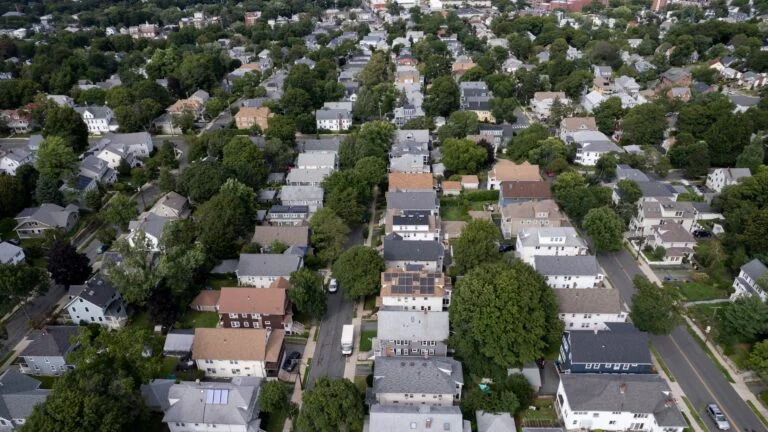

A new 2026 Greater Boston Housing Report Card finds that price growth has cooled, but the region’s housing outlook is weakening as construction and population growth slow, deepening affordability and economic risks.
Even with some easing, housing remains exceptionally expensive: average rent reached $3,074 a month in August 2026, the third-highest among major U.S. metro areas, while home values have risen about 50% and rents about 35% since January 2019.
The affordability squeeze is stark across the region: 32 municipalities had median single-family sale prices above $1 million in fall 2026, nearly half of renters were cost-burdened, and a household needed about $181,000 in annual income to afford a $600,000 home with a 3.5% down payment.
The burden falls especially hard on Black and Latino renters: just 9% in each group earn enough for the benchmark home, compared with about 21% of white renters and Asian American and Pacific Islander renters.
Construction has risen since 2024, but much of that activity reflects projects started before the pandemic and completed after delays; Greater Boston permitted only 7,746 units in 2025, down from 12,000 to 15,000 annually between 2015 and 2021.
The report questions whether the building rebound can last, noting that permits for future construction are down and that the easiest projects under the MBTA Communities law and accessory-dwelling-unit rules may already have been approved.
Population growth also slowed sharply: Greater Boston added about 9,000 residents in 2025, compared with 49,000 in 2024, as international immigration fell and births accounted for all growth.
Researchers warn that federal funding cuts, reduced SNAP and Medicaid support, immigration restrictions and high interest rates could weaken the regional economy while adding pressure on lower-income households and slowing construction.
Gov. Maura Healey’s administration says Massachusetts needs 222,000 homes from 2025 to 2035 and has 100,000 in its development pipeline, pointing to accessory dwelling units, zoning changes, faster permitting and housing on underused public property.
Voters narrowly rejected Question 7 by 1.2 percentage points; the measure would have limited lot-size requirements in municipalities with public water and sewer, and was projected to produce about 780 homes a year, though its infrastructure conditions would have excluded much of the state’s land.
With that ballot measure defeated, pending State House proposals carry added weight, including incentives for multifamily housing on religious organizations’ land and a plan to allow duplexes wherever single-family homes are permitted.
The report also recommends exploring social housing—publicly owned or supported, mixed-income homes designed to stay affordable over the long term—and points to projects in Charlestown and East Boston as examples.
Summary based on 8 sources
Get a daily email with more US News stories
Sources
The Boston Globe • Nov 10, 2026
Boston housing costs continue to soar, threatening region
Boston.com • Nov 10, 2026
For Greater Boston renters, the jump to homeownership keeps getting harder
GBH • Nov 10, 2026
Federal policy worsens Boston-area housing crisis, says report