AI Errors Are Driving Costly Business Decisions, Surveys Find
November 13, 2026

AI is already part of daily work for nearly 90% of professionals surveyed, but a GWI poll of 1,883 senior insights, agency and marketing professionals in the U.K., U.S. and Singapore found that 80% frequently encounter inaccurate or misleading findings.
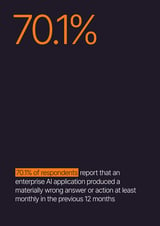
A separate Paligo-commissioned survey of 411 business leaders in the UK, US, Germany and Benelux found that 70% had experienced materially wrong AI answers or actions at least monthly over the previous year.
The errors are reaching decision-makers: more than half said they had made a significant business decision based on AI insights later found to be incorrect or misleading, even as over 90% of organizations were building or using AI tools that rely on external data.
Verification is a clear weak spot: just 36% said they checked AI insights most of the time, while 72% said AI can make information seem more relevant than it is; 63% had unknowingly used outdated insights, and 68% thought colleagues had, too.
The underlying information can be difficult to trust or trace: 27% said investigations uncovered outdated retrieved material, 25% found relevant information from different sources had been combined incorrectly, and only 22% could always identify the source version used by AI applications in or near production.
Among the 334 respondents who had encountered AI errors, 51% said investigating, checking and correcting a typical problem took at least five employee hours; although 83% of all respondents checked answers against original sources frequently or occasionally, only 27% measured the time involved.
The consequences included process or project delays for 22%, additional technology or computing costs for 18%, and direct financial loss or revenue impact for 14%.
Across the full sample, 49% reported a safety incident or increased safety risk, a compliance or legal issue, or reputational impact; the methodology gives a conservative market-based count of at least 78 respondents reporting one of these outcomes.
Marketing leaders also reported fallout: 82% had experienced at least one adverse outcome from inaccurate AI insights, most commonly internal rework (38%), delayed decisions (36%) and customer complaints (34%).
Audience profiling brings its own risks: 76% said AI can reinforce outdated assumptions, and nearly 70% had seen it misrepresent their organization’s target audience, despite strong confidence in using AI for profiles and segmentation.
Respondents also questioned AI’s ability to explain consumer behavior: 71% said it can show what consumers do but not why, 80% said human involvement is still needed to understand motivations, and 75% believed AI will never replace direct human research.
Paligo CEO Rahul Yadav said many failures start with poor or outdated source content, and urged companies to keep information current, approved and traceable while allowing AI to flag unanswered questions or decline to respond without an approved answer.
Summary based on 2 sources
Get a daily email with more AI stories
Sources
GlobeNewswire • Nov 12, 2026
AI errors hitting business finances and delaying projects globally
Marketing Dive • Nov 13, 2026
AI-derived audience insights hurt results: What the numbers say