Tesla Reports Record 264 Autopilot and FSD Crashes in September, Including Three Fatal Collisions
November 16, 2026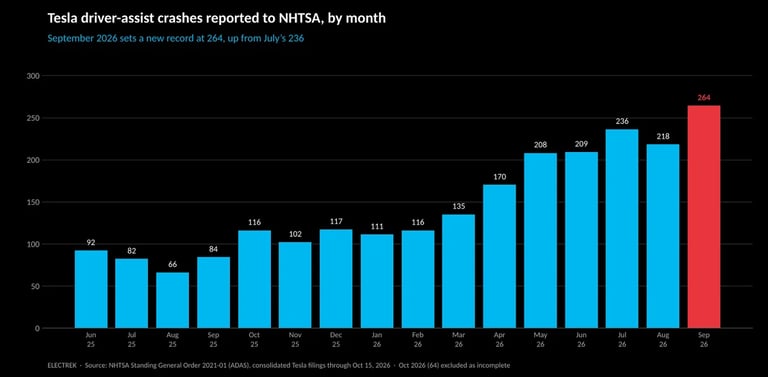

Tesla reported 264 Autopilot or FSD crashes to NHTSA for September 2026, the dataset’s highest monthly total, surpassing the previous record of 236 in July; late filings could push the count higher.
By November 16, an investigation had identified 12 crashes involving Tesla driver-assistance systems that killed 16 people, including drivers, passengers, a roadside helper and a motorcyclist.
NHTSA’s latest release added three fatal crashes and seven deaths, including two incidents near Naples, Florida: a Model X that left Golden Gate Parkway and overturned, killing a passenger, and a Model 3 that struck an overturned truck on Interstate 75, killing two passengers and a man who had stopped to help.
In another Florida crash on May 31, a Tesla operating with a driver-assist system engaged at 71 mph struck an overturned truck on Interstate 75, killing three people.
In El Dorado Hills, California, a Model Y left a parkway, hit a tree and caught fire; three of its four occupants died.
NHTSA reporting rules cover certain crashes when a Level 2 system was engaged within 30 seconds and criteria such as a fatality, airbag deployment or hospital transport are met; a report does not establish that the system caused the crash.
The reports raise questions about public understanding of these crashes, but the totals alone do not prove that Autopilot or FSD caused them.
NHTSA’s public data lists more Level 2 driver-assistance crashes involving Tesla than any other manufacturer, but the counts are not adjusted for fleet size or miles traveled, and the agency cautions that the data may be incomplete or inaccurate.
Electrek’s analysis of the merged NHTSA dataset found 69 fatal Tesla driver-assistance crash reports since 2019.
Tesla has redacted information in its NHTSA filings, citing confidential business information; investigator Fred Lambert says it is the only high-volume reporter withholding all the details he is seeking.
The redactions include crash narratives, software versions and whether incidents occurred within approved operating areas, limiting the public’s ability to assess the circumstances and systems involved.
September’s crash count may rise as late reports arrive, and the newly disclosed fatal crashes could affect whether NHTSA expands its engineering analyses into formal defect investigations.
Summary based on 2 sources
Get a daily email with more Tech stories
Sources
BASENOR • Nov 16, 2026
Tesla Autopilot/FSD Crashes Hit Record in NHTSA Data: What Owners Should Do