FDA Sets New Safety and Validation Rules for AI Capsule Endoscopy Software
November 28, 2026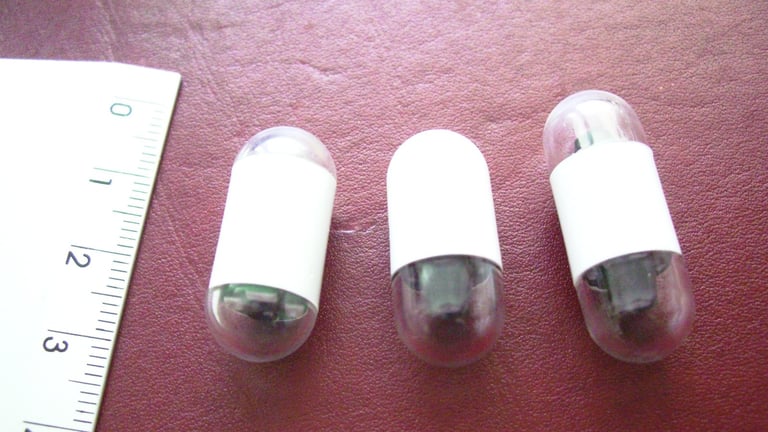

The FDA has issued a final order classifying gastrointestinal capsule endoscopy analysis software as a Class II medical device under 21 CFR 876.1540; the order is scheduled to take effect upon Federal Register publication on November 30, 2026, while the classification has applied since December 12, 2023.
Five special controls require clinical performance validation in representative patients against clinically justified ground truth, testing with data from sites separate from those used for development, and performance reporting at patient, lesion and image levels.
The controls also address risks from false positives that could prompt unnecessary treatment, false negatives or tract-site misclassification that could cause missed findings, and clinician overreliance on the software.
Additional requirements cover standalone algorithm testing, software and any hardware safety testing, and detailed labeling.
Labels must warn against overreliance, state that the software is not a standalone diagnostic and require clinicians to review both flagged findings and the absence of findings; they must also summarize performance, subgroup results and applicable postmarket surveillance data.
The FDA may require postmarket surveillance unless it determines that the premarket evidence makes it unnecessary.
The 2023 De Novo decision for Ankon Technologies’ NaviCam ProScan relied in part on the ARTIC study, in which AI-assisted physician reading found significant small-bowel lesions in 73.7% of 133 analyzed patients, compared with 62.4% for standard reading and 78.2% for the expert-board reference; the AI-assisted approach missed seven patients identified by the board.
The FDA’s decision summary said ARTIC did not collect participants’ race or ethnicity and recorded the algorithm’s training and test datasets as entirely Asian, highlighting the importance of demographic and subgroup analyses under the new requirements.
A September 2026 FDA substantial-equivalence decision for CapsoVision’s CapsoView and CapsoCloud under product code QZF illustrates the 510(k) pathway in practice; developers and research offices are advised to plan for validation, surveillance costs, clinical data arrangements and labeling requirements.
The software analyzes recorded gastrointestinal capsule videos and flags images or areas that may contain lesions, helping clinicians review findings without replacing their judgment; new products remain subject to the 510(k) premarket notification process.
Summary based on 1 source
Get a daily email with more AI stories
Source

CASRAI • Nov 27, 2026
FDA Classifies Capsule Endoscopy Analysis Software as Class II With Special Controls