Top stories



Parkrun Celebrates Millionth Event Milestone with Dame Kelly Holmes at Bushy Park
The one-millionth parkrun event was celebrated at Bushy Park, highlighting the global reach and community spirit of the free running initiative. Founded by Paul Sinton-Hewitt in 2004, parkrun has expanded to 2,800 locations in 23 countries, emphasizing accessibility, social interaction, and health benefits.
bbc.com + 11


Republicans Urge Trump to Back Ken Paxton's Senate Bid Amid Funding Concerns
Trump is under pressure from Republicans to back Ken Paxton's Senate campaign financially after Paxton's primary win, amid concerns over his electability. With Paxton trailing Democratic challenger Talarico in fundraising, GOP strategists worry about resource allocation and Texas' competitiveness, while Trump's MAGA Inc. holds a substantial, yet uncommitted, war chest.
yahoo.com + 4

Apple and Samsung to Launch First Foldables: iPhone Fold vs Galaxy Z Fold 8 Showdown
Apple and Samsung are preparing to launch their inaugural foldable phones, the iPhone Fold and Galaxy Z Fold 8, later this year. With distinct designs and features, both devices are speculated to hit the market with prices between $2,000 and $2,500, featuring significant camera and battery enhancements.
mashable.com + 2


Prompt injection attacks pose a significant threat to AI agents using GPT-5 and Gemini in web environments, with high success rates in both direct and indirect attacks. The StakeBench study reveals that defense mechanisms are insufficient, highlighting the need for improved security measures to protect stakeholders from varied attack vectors.
decrypt.co + 1


You're All Caught Up
You've seen all top stories, below are some other stories.
CoreWeave and Nebius report impressive revenue growth, with CoreWeave up 112% and Nebius 684%, yet neither firm is profitable as they invest heavily in AI-driven cloud infrastructure. Investors face a choice between these high-risk, high-reward startups and established, profitable legacy cloud giants like AWS, Microsoft Azure, and Google Cloud.
fool.com + 5
AI is revolutionizing legal document management by enabling advanced drafting, summarization, and reasoning, making AI compatibility essential for law firms. This shift turns archived documents into live knowledge bases, improving efficiency and client outcomes, with the market expected to grow significantly by 2034.

blockchain.news + 1
Bill Gates cautions against government stakes in tech firms, suggesting it may distort competition by favoring state-backed entities over private innovation. The debate intensifies as the U.S. government acquires significant equity in firms like Intel and considers broader involvement in critical sectors, raising concerns about market fairness and investment stability.

timesofindia.indiatimes.com + 1
Germany's army chief alerts NATO of a potential Russian attack by 2029, emphasizing the urgency for military readiness and increased defense spending. Concurrently, Germany embarks on its largest peacetime military expansion in decades, aligning with NATO's call for enhanced industrial production and combat capabilities.

cbc.ca + 2
Mercedes-Benz Korea is enhancing its 'Talk to Data' initiative by building an AI-ready semantic layer on Databricks Unity Catalog. This aims to unify BI and AI tools with consistent KPI definitions, potentially setting industry standards for AI governance and analytics scalability.

databricks.com + 1
The Jefferson Lab Data Center's groundbreaking in Newport News kicks off the High-Performance Data Facility (HPDF) project, expanding scientific research capabilities beyond nuclear physics. Slated for completion in 2030, the $500 million facility aims to accelerate cross-disciplinary AI-enabled research and is a key investment in Virginia's scientific infrastructure and economic development.

newswise.com + 3
Nvidia is poised for significant growth in 2026 with the introduction of the Vera Rubin data-center platform and the RTX Spark superchip for Windows laptops. These innovations mark Nvidia's strategic expansion into CPU dominance, further solidifying its leadership in AI and data-center markets.

fool.com + 2

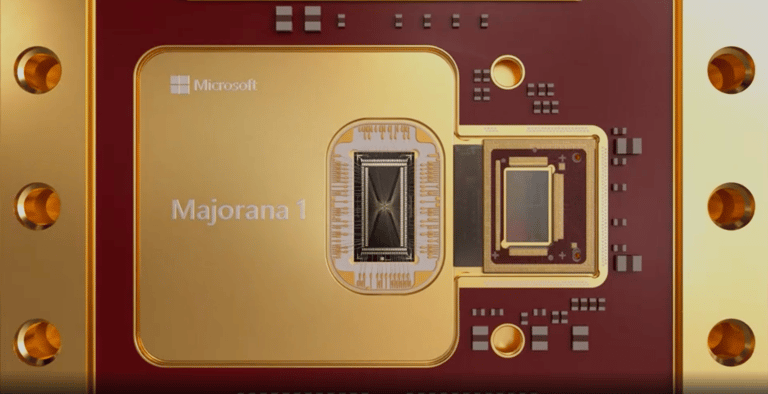
Microsoft and Quantinuum have achieved a significant breakthrough in quantum error correction, demonstrating an 800-fold reduction in error rates on trapped-ion hardware. This advancement marks a key step toward fault-tolerant quantum computing, yet scaling to cryptographically significant sizes remains a distant goal.
thequantuminsider.com + 1