UN Renews Central African Republic Mission, Paving Way for Gradual Drawdown
November 12, 2026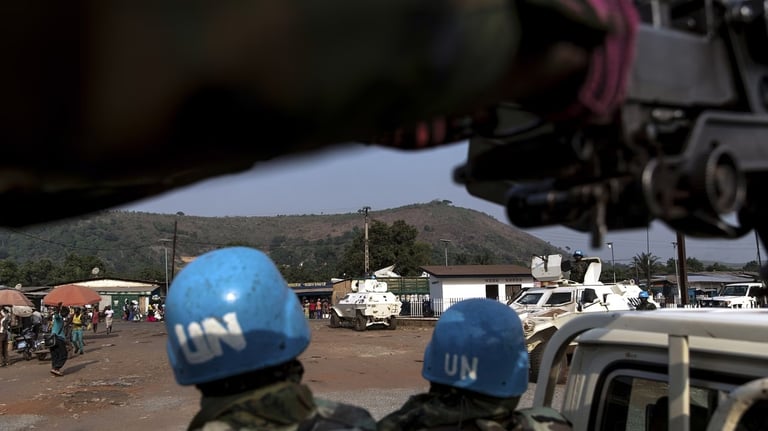

The UN Security Council unanimously renewed MINUSCA’s mandate in the Central African Republic until 15 November 2027, while opening the way for a gradual reduction and reconfiguration of the mission after 12 years in the country.
Drafted by France, the resolution authorizes MINUSCA to adjust troop levels, consolidate its work and continue supporting the Central African government, particularly in border areas.
Established in 2014 during the civil war, MINUSCA has supported civilian protection, the extension of state authority, and political and security reforms; the renewed mandate stresses avoiding gaps as responsibilities shift to national institutions.
Marius Aristide Hoja Nzessioue welcomed MINUSCA’s contribution and said the transition must transfer responsibilities without ending the mission’s presence before national institutions can preserve peace.
President Faustin-Archange Touadéra has called for a coordinated, gradual withdrawal that lets the state assume security responsibilities without creating a sudden gap; Russia and France backed a withdrawal tied to conditions on the ground during a 20 October Security Council briefing.
As part of its reconfiguration, MINUSCA closed and handed back 21 operational bases between January and June, concentrating stronger forces where they are most needed.
MINUSCA retains nearly 10,000 military personnel and 2,000 police officers; its numbers fell in 2025 after the mission’s annual budget was cut by 15%.
The mission will support deployment of national security forces, including a pilot garrison army, and continue work on disarmament, demobilisation and reintegration, combating impunity, and protecting human rights.
Security has improved enough for elections to have taken place in December 2025 with MINUSCA’s support, but armed groups remain active, particularly near the borders with Chad, Sudan and the Democratic Republic of the Congo.
In the southeast, suspected remnants of the Lord’s Resistance Army were blamed for four deaths and the abduction of about 68 civilians, including 40 children, between June and September.
An attack on Am-Dafock near the Sudanese border in late June killed 29 people, including seven civilians and 22 defence and gendarmerie personnel, injured 24, displaced about 17,500 residents and wounded six UN peacekeepers.
Clashes in 2026 between the Central African army, supported by Russian paramilitary allies from Wagner, and the Azandé Ani Kpi Gbè militia also displaced people in Haut-Mbomou; as of 31 August, about 416,000 people remained internally displaced and more than 730,000 were refugees in neighboring countries.
Summary based on 3 sources
Get a daily email with more World News stories
Sources
Africanews • Nov 12, 2026
UN weighs peacekeeping cuts in Central African Republic as mandate expires
Africanews • Nov 14, 2026
UN security council extends Central African Republic peacekeeping mission until 2027