OpenAI CEO Warns of Rapid AI Acceleration, Calls for Global Oversight Amid Tech Disruption
February 22, 2026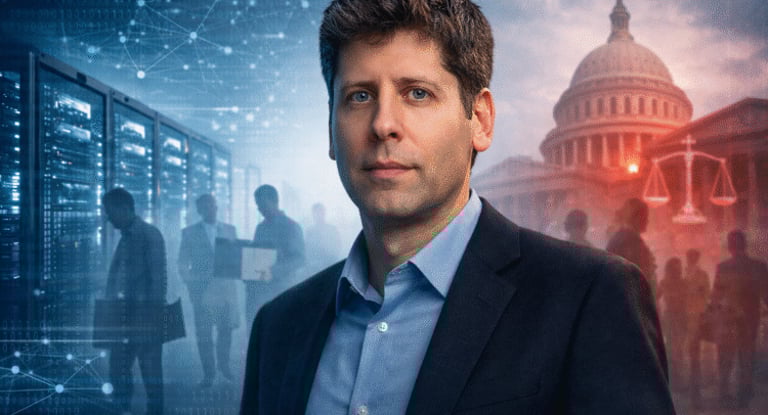

A concrete timeline is sketched: an intern-level AI research tool by September 2026 and a fully automated AI researcher by March 2028, with ripple effects for data centers, GPUs, and cloud services.
Codex 5.3’s coding model was influenced by the model itself during training and deployment, indicating models contributing to their own development.
The future of work could see many software tasks becoming obsolete or transformed, with traditional handwritten coding practices like C++ fading in relevance.
AI progress will have uneven impacts across jobs, meaning some roles will be substantially affected while others are less impacted.
OpenAI CEO is signaling that AI progress is accelerating faster than previously anticipated, with models becoming extremely capable soon and the takeoff described as stressful and anxiety-inducing.
He adds that OpenAI already has more capable models beyond what is publicly disclosed and warns that the pace of advancement will outstrip global preparedness.
The takeoff is unfolding more rapidly than expected, a development he characterizes as nerve-wracking and high-pressure.
The piece situates these claims within broader AI industry context and stock-related observations, noting the use of familiar industry tools without introducing new external information.
AI could supplant simple graphic-design tasks like birthday invitations, yet human-created art remains valuable and may command higher prices as AI art becomes cheaper.
OpenAI’s ambitious goals are likely to sustain heavy capital spending on AI infrastructure, benefiting key players in training, cloud services, and hardware ecosystems such as Nvidia, Microsoft, and Alphabet.
He calls for global oversight of AI, likening it to the International Atomic Energy Agency to curb centralization of technology and mitigate systemic risk.
He acknowledges potential job displacement due to AI, warns that some layoffs may be misattributed to AI, and cautions against “AI washing” in corporate messaging.
Summary based on 2 sources
Get a daily email with more AI stories
Sources
The Decoder • Feb 21, 2026
OpenAI CEO Sam Altman warns "the world is not prepared" as OpenAI accelerates research using its own AI
Tipranks • Feb 22, 2026
“The World Is Not Prepared,” Says OpenAI CEO Sam Altman as AGI Timeline Speeds Up