Lam Research Boosts AI Investments to Enhance Semiconductor Production in Arizona and California
May 22, 2026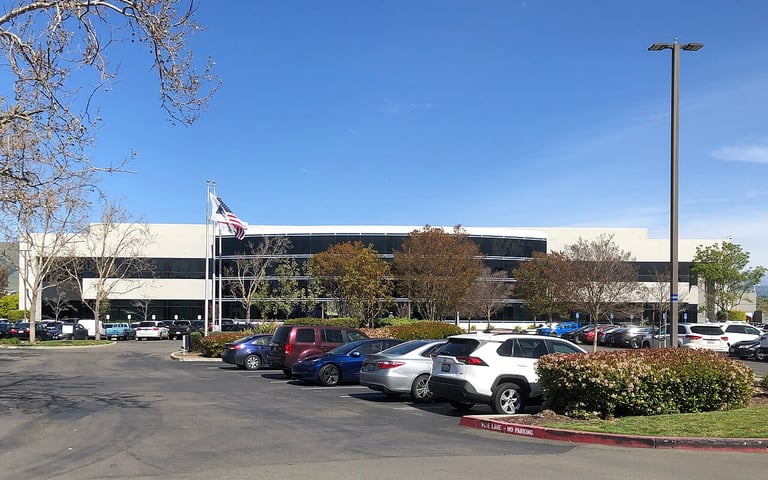


The contest underscores Lam’s commitment to funding AI-enabled tooling innovation in the chipmaking ecosystem.
Lam Research is expanding its investments in AI and advanced sensing to boost semiconductor manufacturing efficiency, with a focus on strengthening its presence in Arizona and California.
CEO Tim Archer says adding more sensors and data-driven AI analyses will enable earlier problem detection and improve wafer yield by predicting and mitigating issues in the system.
The enhancements are designed to help customers produce more chips with fewer defects per wafer, supporting growing demand for AI-related chipmaking.
Lam reported record quarterly revenue of about $5.84 billion with non-GAAP diluted EPS of $1.47 for the period ended March 29, 2026, and projected Q2 revenue of roughly $6.6 billion, plus or minus $400 million.
Lam has benefited from surging AI chip demand, with its shares up more than 75% this year as customers buy more tools.
Lam is integrating Lightfinder’s measurement technology to shrink and merge measurement tools into existing equipment, reducing the need for separate measurement steps.
Lam hosted a venture-capital competition at its Fremont headquarters, awarding $250,000 to Lightfinder, an MIT spinout developing compact, in-situ measurement tech.
Lam is pursuing internal investment and startup partnerships, including the $250,000 investment in Lightfinder to develop compact, affordable measurement technologies that integrate with existing machines.
Packaging and panel-level processing are central to the strategy, with the creation of a Panel-Level Packaging Center of Excellence in Salzburg to support scalable, high-density interconnects for AI and HPC.
The AI-enabled tools aim to deliver tighter process control, faster measurement, and richer data to shorten defect-detection cycles and drive yield gains for leading chipmakers.
The initiative supports real-time data collection from machines and wafers to improve process control, speed up troubleshooting, and reveal weak signals that could foretell yield losses.
Summary based on 9 sources
Get a daily email with more AI stories
Sources

Yahoo Finance • May 21, 2026
Lam Research focused on adding AI to chipmaking tools as it eyes US expansion, CEO says
Reuters • May 22, 2026
Lam Research focused on adding AI to chipmaking tools as it eyes US expansion, CEO says
The Mighty 790 KFGO | KFGO • May 21, 2026
Lam Research focused on adding AI to chipmaking tools as it eyes US expansion, CEO says
Investing.com • May 21, 2026
Lam Research focused on adding AI to chipmaking tools as it eyes US expansion, CEO says