$12M NIH Grant Fuels AI-Driven Medical Research Hub in Hawaii, Boosting Local Health and Economy
June 21, 2026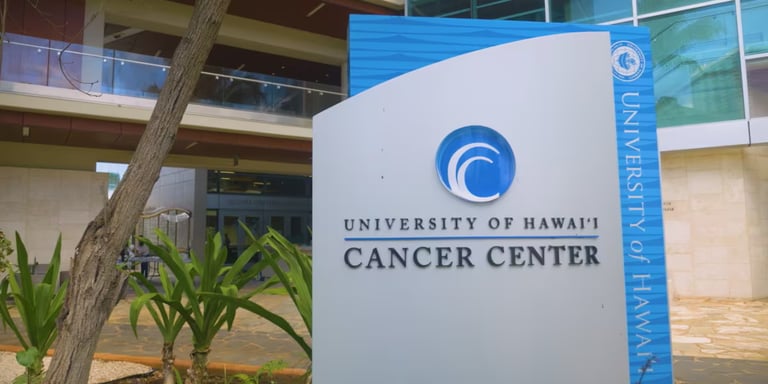


Support from UH leadership and U.S. Senator Brian Schatz underscores the program’s potential for economic and health impact in Hawaiʻi and beyond.
A $12 million NIH grant will fund the creation of the Pacific Center for Artificial Intelligence and Data Science in Medicine (PAC-AID) at the University of Hawaii Cancer Center and the John A. Burns School of Medicine, advancing AI-driven biomedical research.
The center will be led by Dr. John Shepherd and Dr. Youping Deng, with governance aligned to UH Cancer Center and JABSOM.
PAC-AID will renovate the UH Cancer Center data center and establish a Medical AI Core to provide researchers with advanced computing resources and AI expertise.
Initial work includes four major research projects and a pilot program for additional studies addressing health challenges affecting Hawaii and Pacific Island communities.
The project emphasizes local governance, hiring, and continued federal support to move from hardware to AI models and clinical pilots, prioritizing tools that reflect local populations rather than relying on mainland datasets.
Leadership projects to create about 26 local jobs and potentially unlock $50 million to $100 million in downstream research funding for Hawaiʻi.
Officials expect the initiative to strengthen Hawaii’s biomedical research capacity and attract further federal funding in the coming years.
The initiative aims to develop six to eight early-stage faculty members and, by year three, potentially secure independent NIH R01 funding, with awards around $3.25 million and additional federal funding totaling over $31 million for Hawaiʻi’s research and healthcare workforce.
Initial funded projects include AI-driven work on full-body imaging for skin lesion triage, pancreatic cancer in Native Hawaiian and Japanese populations, environmental toxicants and fetal development, and genetic traits in congenital heart disease.
The initiative seeks to tailor AI datasets and computing power to Hawaiʻi’s diverse communities to improve diagnoses and treatments.
PAC-AID will accelerate collaborative projects, training, and model development while minimizing the need to move identifiable patient data off-island.
Summary based on 3 sources
Get a daily email with more AI stories
Sources
Hoodline • Jun 21, 2026
Kakaako Garage Becomes Mini AI Lab For Pacific Patients
University of Hawaiʻi System News • Jun 20, 2026
UH researchers awarded $12M grant to advance AI, data science in medicine | University of Hawaiʻi System News
Hawaii News Now • Jun 22, 2026
UH receives $12 million grant for new AI medical research center