UH Manoa Joins DOE's Genesis Mission with AI Research in Nuclear Physics and Robotics
July 28, 2026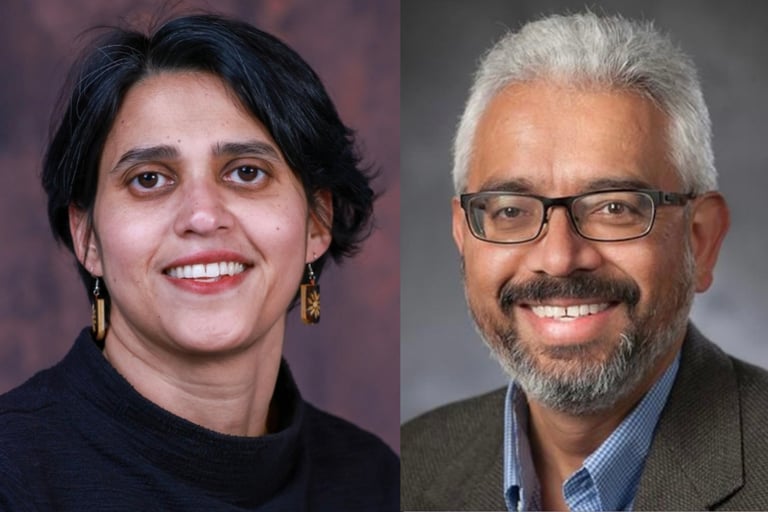

UH Manoa researchers have two projects selected for the DOE Genesis Mission, placing the university in a national effort to accelerate scientific breakthroughs with AI.
Genesis Mission Phase I funding ranges from $500,000 to $750,000 for nine months to each selected team, supporting AI-driven research across nuclear physics, astrophysics, robotics, and materials science.
The Genesis Mission aims to create the world’s most powerful integrated science discovery platform by funding AI-enabled research across multiple disciplines.
Roy’s project, led by Yiran Chen, develops Neuromorphic Circuit Primitives for Robotic Embodied Physical AI to boost speed and efficiency of AI-powered robots.
The STRATOS project establishes a dual-site platform at UH Manoa and Argonne, with collaboration from Old Dominion University.
UH Manoa selected two projects: one led by Liuwan Zhu in Electrical and Computer Engineering and another by Zepeng Li in Physics and Astronomy.
Zepeng Li’s Project 2 aims to build an AI foundation model to aid searches for neutrinoless double beta decay, standardizing data analysis across detector technologies to accelerate discovery.
The neutrinoless double beta decay AI framework enables unified data analysis across multiple detectors to speed up the search.
The second project seeks to accelerate nuclear physics discovery by creating a shared AI foundation model for neutrinoless double beta decay across detectors.
STRATOS focuses on AI security for critical infrastructure, developing a time-critical security platform tested on UH Manoa’s microgrid and Argonne systems, with collaborators from Old Dominion University and Argonne.
Project 1, led by Liuwan Zhu, develops STRATOS to detect and respond to cyber threats in real-time AI systems.
Tania Roy, Associate Professor of Electrical and Computer Engineering at Duke, contributes to the neuromorphic hardware effort that mimics brain-like architectures for robotics.
Summary based on 3 sources
Get a daily email with more AI stories
Sources
University of Hawaiʻi System News • Jul 27, 2026
UH Mānoa researchers selected for national effort to advance AI-driven science | University of Hawaiʻi System News
University of Hawaii News
Mānoa: UH Mānoa researchers selected for national effort to advance AI-driven science
The American Bazaar • Jul 27, 2026
Two Indian American Duke researchers selected for federal AI research program