2026 Review Unveils AI Risks and Governance Gaps in Healthcare
August 19, 2026


The story centers on regulatory, patient-safety, compliance, and liability concerns surrounding healthcare AI adoption, stressing transparency, human oversight, and auditability.
A growing body of research highlights cybersecurity risks in digital health tools, phishing threats to health institutions, and the broader implications of cyberattacks on electronic health records.
The Nature 2026 article is a collaborative effort among European and international institutions, bringing together a wide network of universities, medical faculties, and research centers.
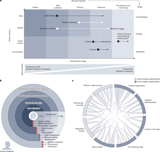
A multidisciplinary review from TU Dresden and collaborators analyzes risks of using large language models in medicine, covering design, training, deployment, and clinical use.
Practical implementations and tools such as ChatEHR and autonomous AI agents for clinical decision-making illustrate the translation from research to practice.
The work surveys foundational and contemporary studies on safety, security, and governance of AI in healthcare, including adversarial detection, governance frameworks, and real-world clinical use.
Researchers emphasize rigorous safety evaluation, transparency, and integrated oversight across research, clinical practice, and regulation through key quotes from leading experts.
Notably, a registered nurse and lawyer holds a pioneering AIGP certification, underscoring expertise in trustworthy and compliant AI systems.
Core themes include AI in clinical decision support, retrieval-augmented generation in medicine, and the robustness and reliability of medical AI.
The article notes widespread use of LLMs without institutional guidance, rising data-protection concerns, and prevalent informal, shadow usage in clinical settings.
Christine Chasse analyzes governance gaps in healthcare AI where implementation outpaces oversight.
Safer-use strategies call for secure development, careful data curation, ongoing evaluation, continuous monitoring, clear institutional responsibilities, local oversight teams, and centralized AI security operations centers.
Summary based on 3 sources
Get a daily email with more AI stories
Sources
Nature • Aug 19, 2026
Safety and security of large language models in healthcare
Mirage News • Aug 19, 2026
AI in Medicine: Study Weighs Risks, Safe Use Strategies