Fields Medalists Warn AI Proofs Threaten Mathematical Rigor and Discovery Process
September 11, 2026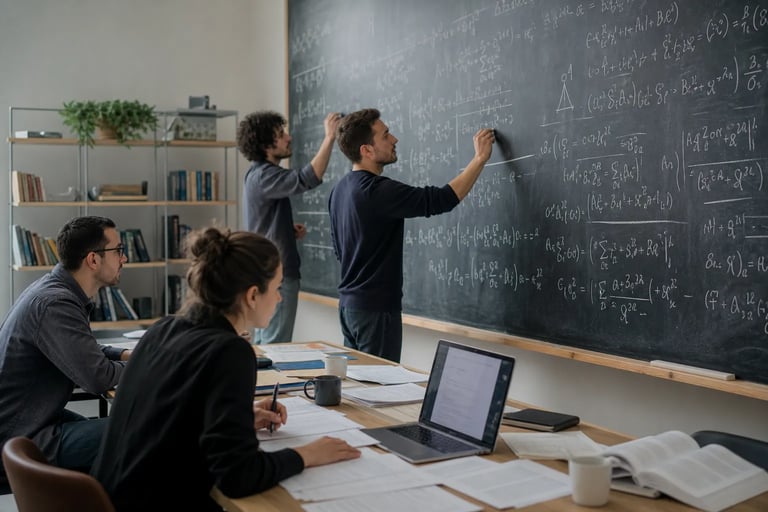


A coalition of twenty-five Fields Medalists warns that AI-driven proofs risk eroding the rigor and process of mathematical discovery, not merely competing to solve problems.
They raise concerns about attribution, plagiarism, and the loss of the human transmission channel of ideas if AI results aren’t properly integrated into the mathematical canon by human researchers.
The letter cautions that rushing to announce AI solutions could shorten the window for careful write-ups, verification, and scholarly discussion.
The piece notes ongoing updates and discussion channels (UA.News Telegram) for continuing coverage.
A brief note on affiliate monetization appears, with Tim Fernholz identified along with background and contact information.
The article argues that mathematics’ value extends beyond proofs to education, question generation, and integration into civilization—the broader intellectual ecosystem.
Public reaction in China centers on research norms and credit attribution, including questions about verification and who checks AI-produced proofs.
NYU professor Tristan Buckmaster accuses OpenAI of pressuring him about a collaborator’s credit and questions whether Codex helped generate a proof in a marathon inference session.
The Navier–Stokes equation resolution is highlighted as a notable AI-assisted mathematical advance.
The article shows ongoing debates and incidents involving OpenAI and AI’s handling of breakthroughs, underscoring tension between speed and rigorous standards.
The piece draws a parallel to other scientific and creative fields facing AI-driven workflow changes and urges preserving the core purpose of work.
The Leiden Declaration from June is cited, outlining how AI-generated proofs may alter mathematical practice and recommending actions for scientists, institutions, and policymakers.
Summary based on 10 sources
Get a daily email with more World News stories
Sources

TechCrunch • Sep 11, 2026
OpenAI’s feud with mathematicians is only escalating
Interesting Engineering • Sep 12, 2026
World’s top 25 Fields Medalists warn machine proofs are sabotaging hardest math
SBS 뉴스 • Sep 12, 2026
Fields Medalists Warn AI Solving Math Problems Threatens Human Intellectual Activity