AI-Driven Turbine Duct Optimization Promises Emission Cuts and Fuel Savings for Future Aircraft Engines
November 28, 2025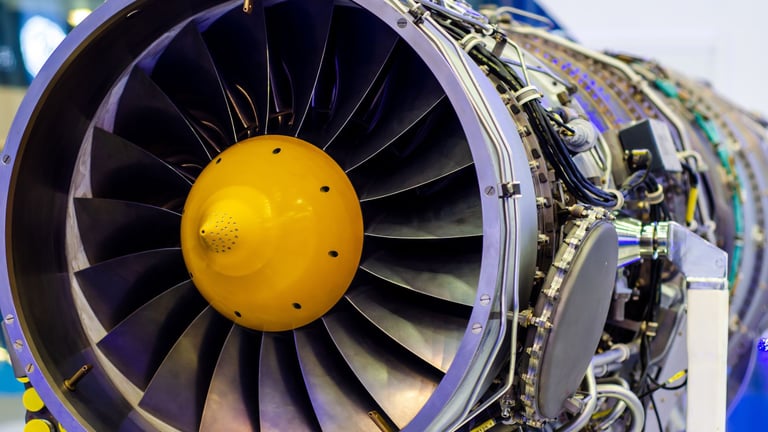

In the ARIADNE project, TU Graz combines long-running flow data with AI and machine learning to speed up design optimization of the ducts and enhance overall engine efficiency.
Reduced order modelling emerged as the most effective method, delivering massive speedups by focusing on the most influential features, with acceptable accuracy for design exploration.
These reduced order models identify data similarities and rely on only the most relevant features, enabling rapid trend prediction and easier identification of optimization opportunities.
Surrogate models struggle outside the validated data range due to interpolation limits, while Physics-Informed Neural Networks (PINNs) still require further development before practical use.
The current model handles two-dimensional duct simulations, with plans to extend to three dimensions by using TU Graz’s turbine-duct database and sharing it publicly to foster collaboration.
Next steps include extending to three-dimensional simulations and continuing industry collaborations to validate and refine the AI-driven optimization framework.
Machine learning revealed dependencies and trends that traditional methods miss, signaling a shift toward more efficient duct and engine design.
The team built a large database of flow data and simulations from collaborations with engine manufacturers and tested three AI approaches, with reduced order modeling delivering the strongest performance.
Three AI approaches explored—reduced order modeling, surrogate modeling, and PINNs—with reduced order modeling delivering the fastest speedups for analyses across varying geometry parameters.
The work is published in the Turbomachinery section of ASME GT2025, with a DOI provided for reference.
Aviation emissions remain a driver for AI-enabled optimization, aligning with Flightpath 2050’s goal to decarbonize air travel as efficiency gains in engines are pursued.
Researchers at Graz University of Technology are advancing the EU’s Flightpath 2050 by using AI-assisted analysis to optimize intermediate turbine ducts, aiming to cut emissions and fuel use in aircraft engines.
Summary based on 3 sources
Get a daily email with more AI stories
Sources
EurekAlert! • Nov 27, 2025
More efficient aircraft engines: Graz University of Technology reveals optimization potential
Interesting Engineering • Nov 28, 2025
New levels of aircraft engine efficiency unlocked with AI tool that improves turbine ducts
Tech Xplore • Nov 28, 2025
More efficient aircraft engines: Scientists reveal optimization potential