India Adopts AI-Driven Model for Predictive Disease Surveillance, Enhancing Public Health Readiness
November 28, 2025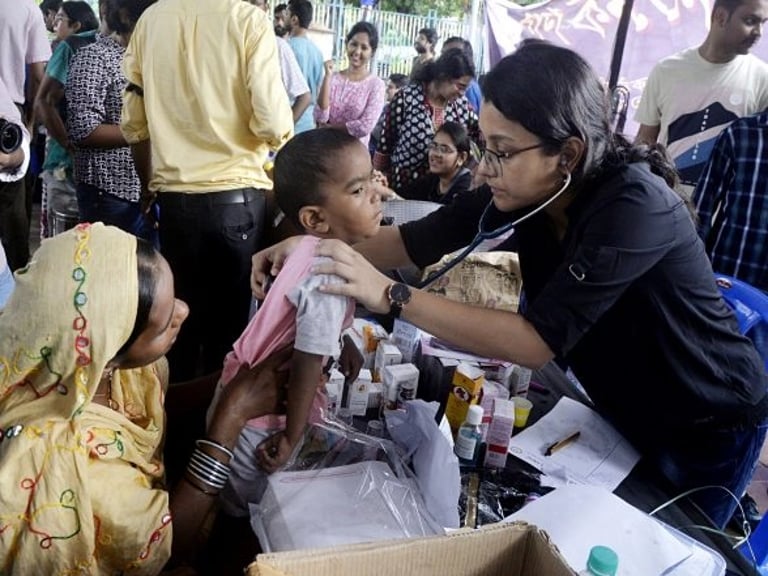

The effort emphasizes ongoing collaboration within IDSP and NCDC and ties into the government’s broader health security objectives for the country.
Collaboration will span multiple ministries and institutions, including ISRO, the Institute of Science in Bangalore, and several IITs, to bolster disease surveillance capabilities.
MSUs under PM-ABHIM are strengthening real-time surveillance, as shown by Nagpur’s prompt AES outbreak alert and fast inter-agency field response.
India is shifting disease surveillance from a detective to a predictive model by integrating artificial intelligence, real-time analytics, and digital platforms to rapidly identify and contain outbreaks.
The MSU network is expanding real-time capacity, enabling rapid detection of suspected pediatric AES and swift field action from NJORT, ICMR, NIE, and CDSCO.
This ecosystem showcases the ability to rapidly detect unusual clinical patterns and coordinate early interventions through collaboration among IDSP, NCDC, ICMR, NIE, and CDSCO.
A Kerala study by ICMR-NIE and state health teams analyzed AFI patient records across six private hospitals, identifying 88 symptom clusters and multiple confirmed outbreaks, illustrating AI’s potential to uncover trends earlier than traditional methods.
Health Sentinel is framed within international health security norms (IHR) and WHO collaboration, signaling AI-enabled surveillance as essential for resilient epidemic intelligence in India and beyond.
This initiative aligns with a vision of a future-ready public health system capable of countering infectious threats and climate-related health risks, with Health Sentinel leading the way as a major AI-driven advancement in pandemic preparedness.
NCDC is partnering with various ministries and research institutions—such as ISRO, IITs, and the Institute of Science in Bangalore—to expand surveillance and early-warning capacity.
Metropolitan Surveillance Units under PM-ABHIM demonstrate real-time surveillance, with rapid detection and coordinated response to suspected pediatric AES cases in Chhindwara, Madhya Pradesh, aided by NJORT and partner institutions.
Summary based on 8 sources
Get a daily email with more AI stories
Sources

Gulf News: Latest UAE news, Dubai news, Business, travel news, Dubai Gold rate, prayer time, cinema • Nov 28, 2025
India turns to AI and real-time analytics to strengthen disease surveillance
footer-brand-icon • Nov 28, 2025
India set to transition from detective to predictive disease surveillance with advanced technology integration
CNBCTV18 • Nov 28, 2025
AI and digital intelligence platforms to reshape India’s disease surveillance system
Devdiscourse • Nov 28, 2025
India's AI-Driven Health Sentinel: Transforming Disease Surveillance