Revolutionary iLive Connect System Brings ICU-Level Home Monitoring to India, Slashes Hospital Readmissions by 76%
February 7, 2026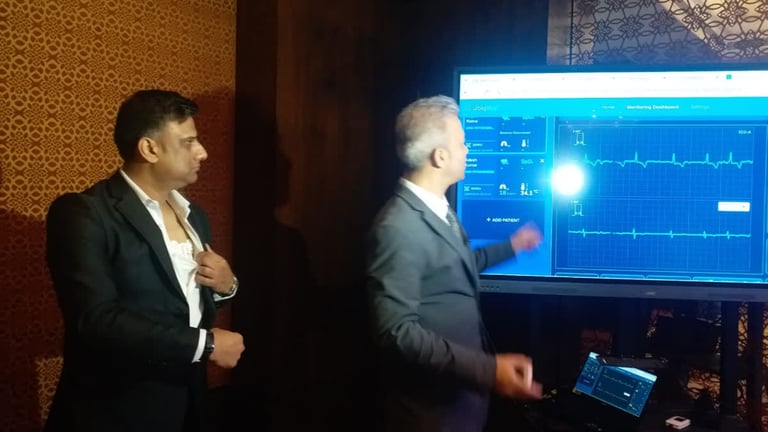

A newly deployed iLive Connect system in India brings ICU-level monitoring into patients’ homes, using a wearable chest patch and wristband to continuously track vital signs and transmit data to a central medical command centre in real time.
Key health metrics tracked include two-lead ECG, heart rate, respiratory rate, oxygen saturation, body temperature, blood pressure trends, physical activity, and heart rate variability, with all data securely uploaded to a cloud-based platform.
The FDA- and CE-approved device is described by experts as the world’s first doctor-led AI healthcare ecosystem that combines continuous monitoring with AI analytics to support clinicians.
The initiative emphasizes proactive management of chronic conditions through continuous data collection and AI-driven analysis to aid clinical decision-making.
Clinicians say the system enables precise monitoring of sleep and other fine health data to prevent emergencies and hospital readmissions, especially after discharge.
Development took more than two years, with a focus on continuous monitoring, predictive analytics, and rapid medical intervention to prevent deterioration.
Note: the post is auto-published from an agency feed and has not been edited for publication.
Dr. Rahul Chandola emphasizes predictive monitoring that detects illnesses early and reduces hospitalisations.
The platform is presented as a physician-led effort within a broader AI healthcare ecosystem, highlighting medical professional leadership.
A 10-week observational study involving over 410 patients reported a 76% reduction in readmissions due to early risk detection, with strong benefits for seniors living alone, those with chronic illnesses, and recently discharged patients.
The system aims to cut hospitalisations and prevent emergencies by detecting deterioration early and enabling proactive, doctor-supervised care.
Overall, the approach seeks ICU-like monitoring at home to reduce hospital visits, particularly for seniors and recently discharged or chronically ill patients.
Summary based on 6 sources
Get a daily email with more Tech stories
Sources

The HinduBusinessline • Feb 7, 2026
Doctor-led AI platform boosts out-of-hospital care, enables 24x7 supervision
footer-brand-icon • Feb 7, 2026
India launches world's 1st doctor-led AI healthcare ecosystem iLive Connect for round-the-clock monitoring
ETV Bharat • Feb 7, 2026
AI-Powered Health Monitoring Device Brings Doctor-Led Care Outside Hospitals
Asianet Newsable • Feb 7, 2026
iLive Connect: India's AI-powered personal ICU at home for seniors