OpenAI Accuses Chinese Firm of AI Technology Theft Amid Rising Geopolitical Tensions
February 13, 2026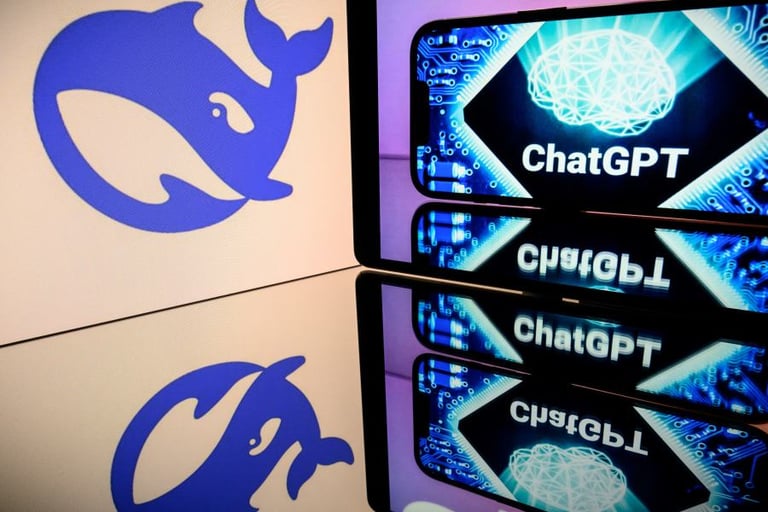

OpenAI has sent a memo to the U.S. House Select Committee on China accusing Chinese firm DeepSeek of free-riding on frontier AI capabilities and using model distillation to copy and obfuscate access methods, including third-party routers.
Distillation is described as one model learning from another by evaluating outputs to transfer knowledge, enabling replication of capabilities by a newer model.
DeepSeek and its parent company High-Flyer did not respond to Reuters inquiries in time for publication.
The piece highlights how technological advancement and geopolitical strategy intersect, foreshadowing future frictions and the need to navigate regulatory, IP, and safety challenges while innovating.
Analysts expect global AI market growth toward trillions, underscoring the push for global standards, export-control enforcement, and stronger IP protection.
The discourse links chip export controls to AI leadership, noting eased restrictions and discussions around Nvidia H200 and H800 chips and White House policy signals.
This concern sits within broader tensions over Nvidia chip exports to China, as some restrictions are being relaxed in certain markets.
Strategic players with cloud infrastructure and investments, such as Microsoft, may be better positioned amid a shifting geopolitical AI landscape.
The dispute underscores tensions between open AI innovation and IP protection as global competition intensifies, with potential for more disputes over tech transfer and compliance.
The controversy reflects broader geopolitical worries about safeguarding AI development, safety, and terms-of-use in a competitive environment.
OpenAI praises the U.S. approach to chip exports but calls for broader action to protect compute, cloud, payments, and web infrastructure against adversaries.
OpenAI points to an infrastructure gap, noting China’s growing power capacity and AI modernization drive as a determinant of frontier AI capacity.
Summary based on 20 sources
Get a daily email with more Tech stories
Sources

The Times Of India • Feb 13, 2026
Sam Altman’s OpenAI accuses Chinese DeepSeek of copying AI models; writes letter to US lawmakers


Slashdot • Feb 13, 2026
OpenAI Claims DeepSeek Distilled US Models To Gain an Edge - Slashdot